Corinthia: A Mosaic of Nature, History, and Taste

Corinthia: An enticing destination with a unique history for quality holidays

Aiming to enhance outward-looking promotion and showcase Corinthia as a multifaceted tourism destination, the Municipality of Corinth organized a three-day press familiarization trip during the “Sea Days 2025” festivities, hosting representatives of major media outlets from August 30th to September 1st.

An initiative coordinated by the Municipality’s Deputy Mayor for Tourism highlighted the region’s many dimensions through a multi-layered itinerary, blending Corinthia’s rich cultural and gastronomic heritage with unique maritime experiences.

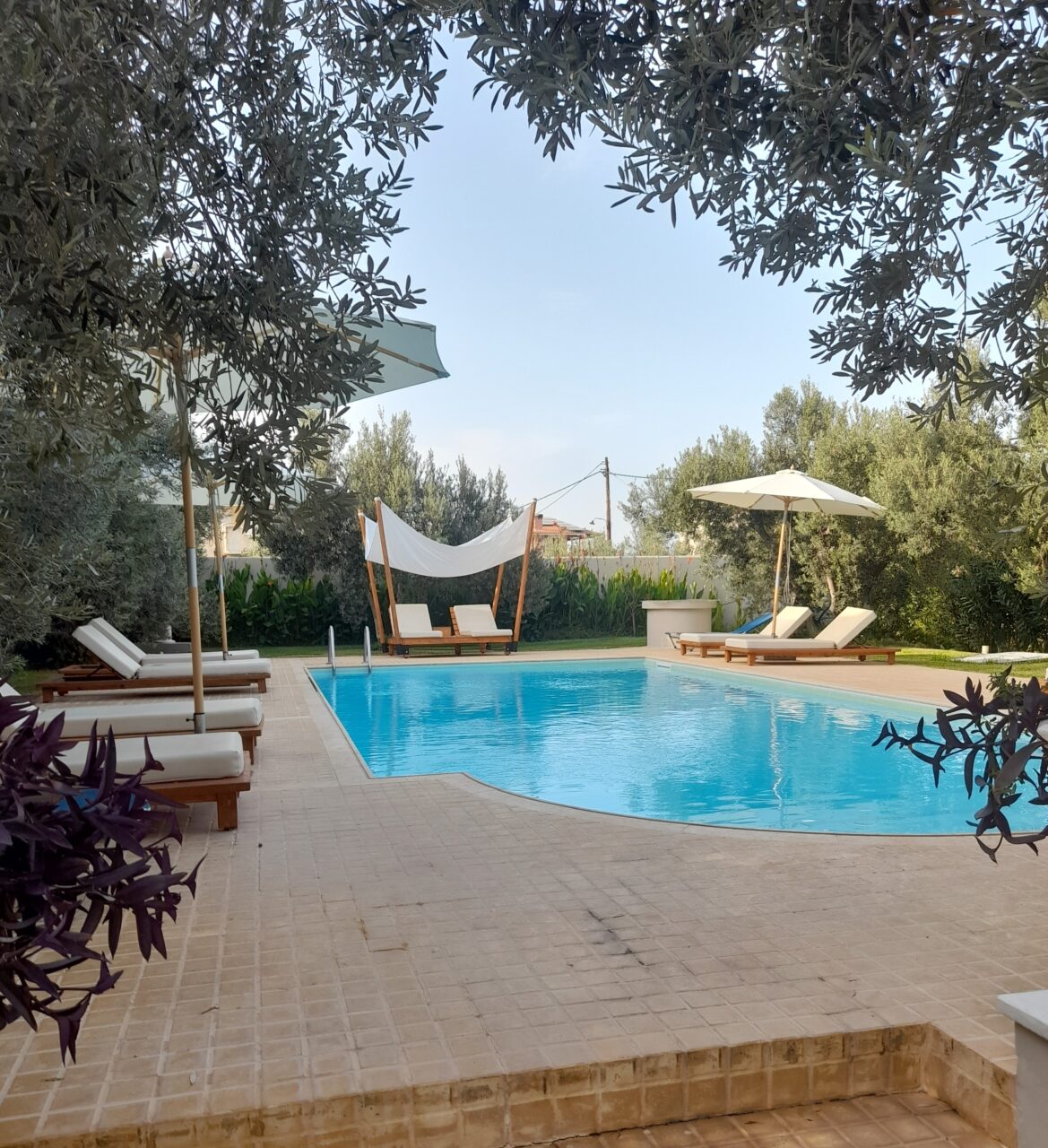
Beginning in Almyri, with accommodation at the luxurious Nereides Luxury Villas, the group embarked on an immersive journey.

Nereides Luxury Villas


Seaside Settlement of Korfos

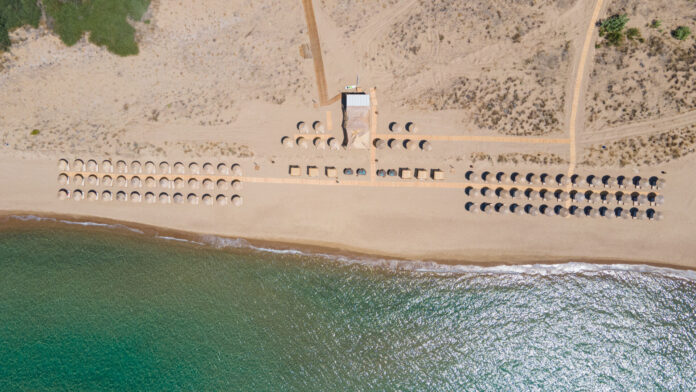
At the southeastern edge of the prefecture lies Korfos beach, which was transformed into a festive scene thanks to the participation of local dance and cultural groups, celebrating the vitality of the area’s traditions during a memorable evening.

On the same beach, the “Ostrako” restaurant invites guests to savor fresh seafood with views over the Argosaronic Gulf.

The second day’s program included visits to the villages of Sofiko and Angelokastro.

  • Korfos

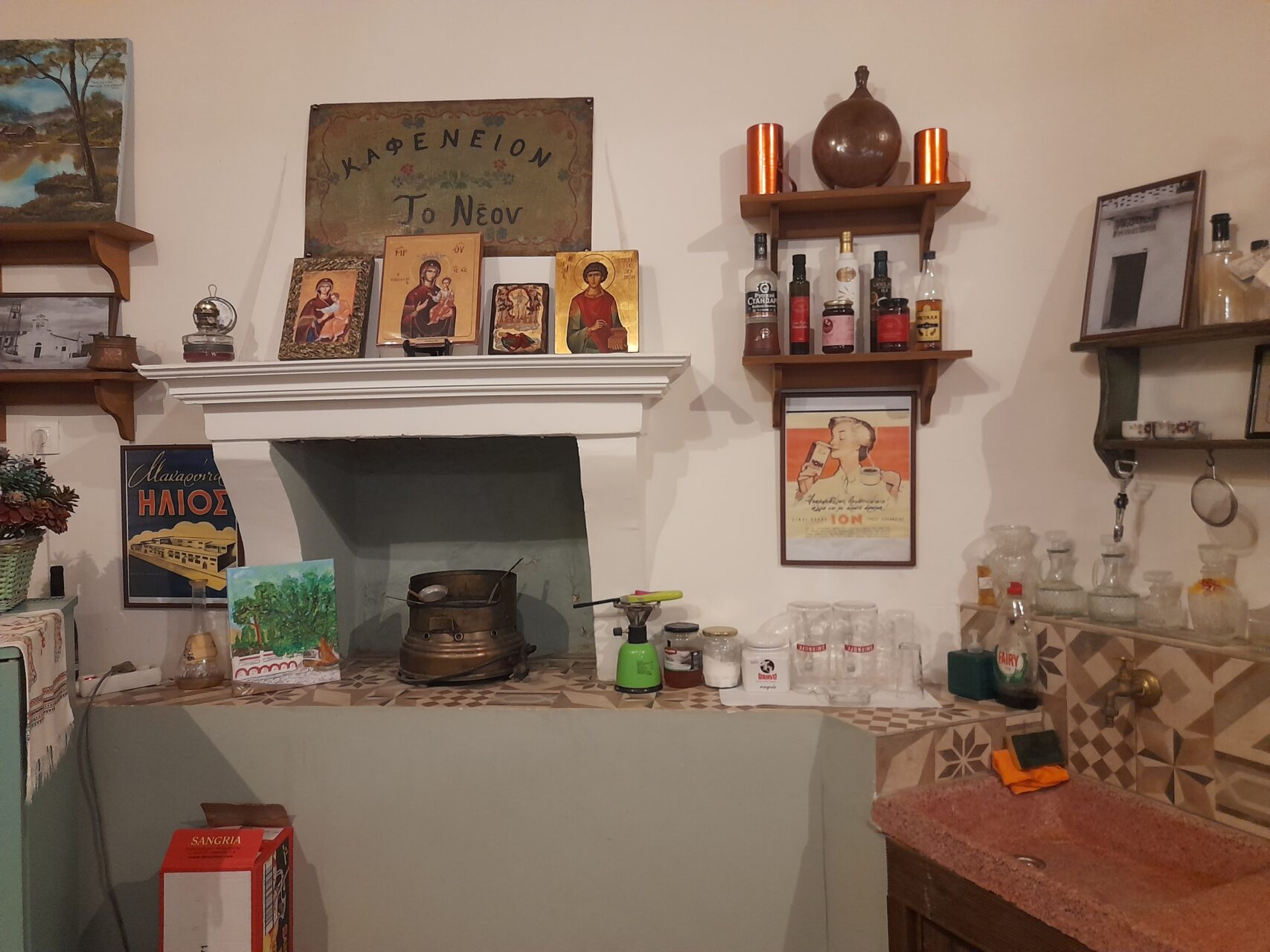
The Café of the Solygeia Women’s Association “Lela Iatridi”

Since 2020, the Solygeia Women’s Association “Lela Iatridi”—named in honor of the wife of legendary submarine “Papanikolis” commander Miltiadis Iatridis, a native of Sofiko—has served as a vital pillar of the local community, highlighting the woman’s role in both the social and cultural life of the area.

One of the association’s key projects is the preservation and documentation of old artefacts linked to Sofiko’s folk heritage. The collection and safeguarding of these items are intrinsically connected to the region’s cultural events, offering invaluable material that brings local history and tradition to life.

The Wild West in Sofiko, Corinthia

Nestled amidst Sofiko’s verdant valley, “The Ranch” provides a unique experience of action, recreation, and learning. Established in 2001, it operates as a children’s summer camp (ages 6–16) and year-round as a theme park, inviting visitors of all ages to discover the world of nature, play, and creativity. Wooden cabins, sports facilities, and thematic events harmoniously blend with the natural landscape, while the specialized staff ensures safety and care in every activity.

Tour and Lunch in Angelokastro, Corinthia

In southeastern Corinthia, perched at an altitude of 800 meters on the southern slope of Mount Politis or Poulageza, lies the village of Angelokastro. The Byzantine castle to the west, rich in centuries of history, bears memories from both Byzantine and post-Byzantine times—its architecture a testament to the era’s strategic and defensive advances. Visitors are invited to stroll along its ramparts, explore its grounds, and discover archaeological finds that illuminate local life and culture.

In the tranquil village of Angelokastro, the traditional tavern “O Patikas” offers an authentic taste of Greek cuisine in a warm and welcoming setting.

The day concluded at Sofiko Theatre, with a concert as part of the “Sea Days 2025” festival.

The third day focused on the Municipality’s agricultural, culinary, and natural identity.

Where Tradition Meets Taste

The “Markellos” olive mill in Galataki, Corinthia, is a landmark for the production of high-quality olive oil, blending time-honored tradition with modern techniques. Visitors can witness firsthand the entire production process—from the olive harvest to bottling—learning the secrets of exceptional extra virgin olive oil. This family-run mill emphasizes quality, authenticity, and sustainability, incorporating environmentally friendly practices. At the same time, it offers visitors unique tasting experiences and the chance to explore the area’s culinary tradition through its local products.

Seaside Oases of Corinthia

Fragolimano and Ammoni, two of Corinthia’s most picturesque seaside spots, combine crystal-clear waters, lush scenery, and a tranquil atmosphere. Fragolimano beach, perfect for swimming, water sports, and relaxation, balances natural beauty with open spaces for families and visitors of all ages. Ammoni is known for its peaceful beach and the region’s traditional fishing culture.

Fragolimano


At Fragolimano, the seafront tavern “To Liotrivi tou Pappou” serves fresh fish and a variety of other dishes in a welcoming setting.

Biodiversity Paradise at the Heart of Corinthia

The Kokkosi wetland is a remarkable natural refuge, home to rich biodiversity and significant ecological value. Kokkosi, connected with the Almyri sea and generated from the brackish waters flowing from the nearby hill, provides a habitat for diverse birds, aquatic species, and plants—offering unique opportunities for observation and environmental education. Well-maintained paths let visitors discover the wetland’s ecological workings and participate in environmental protection actions.

The journey concluded with events staged by local cultural associations on Almyri’s beach and Mediterranean cuisine at “Kokos” Restobar.

The Mayor of Corinth, Mr. Nikos Stavrelis, commented on the initiative:

“Solygeia and Saronikos represent two municipal units of exceptional beauty, where sea meets mountain creating scenery that captivates every visitor. As the Municipality of Corinth, we place special emphasis on developing tourism in these two areas, highlighting their unique advantages and investing in infrastructure projects that will drive their sustainable progress. Especially significant is the fact that two of our beaches have been awarded the ‘Blue Flag’—at Almyri and at Korfos—confirming the quality and cleanliness of our waters. This summer, tourism increased throughout the municipality, especially along the coastal strip of Solygeia and Saronikos, confirming that visitors recognize the unique value of our region. Our goal is to consistently continue interventions that upgrade infrastructure, promote outreach, and offer residents and visitors an experience worthy of the natural beauty we possess.

Nafpaktia: Reintroducing itself to the modern traveler

Nafpaktia: Reintroducing itself to the modern traveler

As part of a targeted initiative to highlight and enhance the region’s tourism profile, the Municipality of Nafpaktia, in collaboration with the Ephorate of Antiquities of Aetolia-Acarnania and Lefkada, organized a three-day press familiarization trip from June 27th to 29th. This event took place under the auspices of the official launch of the new tourism campaign, titled “Whatever You’re Looking For Awaits You #here.”

Against the backdrop of Nafpaktia’s unique cultural and natural landscape, representatives from leading media outlets experienced firsthand the region’s limitless possibilities, through a series of authentic experiences interweaving history, culture, nature, and distinctive local gastronomy.

Presentation of the New Tourism Campaign

The familiarization trip began with the official presentation of the Municipality’s new tourism campaign, co-produced with the Ephorate of Antiquities of Aetolia-Acarnania and Lefkada. The event took place in a setting of great symbolic significance—framed by the historic city walls and the tranquil Corinthian Gulf—at the iconic Venetian Port, and was attended by local officials, campaign contributors, and a large audience.

On Psani Beach, the seaside restaurant “Byzantino” serves exquisite Mediterranean cuisine, perfectly complemented by a unique seaside view.

Discovering Nafpaktos

The second day was dedicated to exploring the town of Nafpaktos and its wider area, with a guided tour led by Ms. Aphrodite Tiligada, a representative of the Ephorate of Antiquities of Aetolia-Acarnania and Lefkada.

Noteworthy landmarks include the Venetian Port—a living monument to the town’s history—the recently restored walls of the port’s breakwaters, the historic lighthouse, and the Fethiye Mosque, built by Bayezid II in 1499 on the eastern breakwater and now serving as an exhibition space. Of particular note is the latest solo exhibition by artist Sofia Sidiropoulou, titled “Transmutation,” which is hosted at the Fethiye Mosque from June 1st to July 15th.

Dominating the western breakwater stands the statue of Giorgos Anemogiannis, the legendary fire ship captain who perished heroically in the Greek War of Independence during an attempt to liberate Nafpaktos. Nearby, at the Miguel de Cervantes Cultural Park, the statue of world-renowned Spanish author and warrior Miguel de Cervantes Saavedra stands as a perpetual reminder of the historic Battle of Lepanto (1571), which took place at the western entrance to the Corinthian Gulf and shaped the course of European history.

The imposing Castle of Nafpaktos—one of Greece’s best-preserved castles—offers panoramic views over the Corinthian Gulf and narrates the site’s rich history. Equally remarkable is the Byzantine Museum of Aetolia-Acarnania, housed within the castle walls and shedding light on the region’s Byzantine and post-Byzantine heritage.

Next to the castle’s ancient walls, the experienced Lepanto Archery team introduces visitors to the art of archery, offering a unique experience that connects with both historical tradition and sport.

A short boat ride from Nafpaktos harbor lies the enchanting islet of Trizonia—the only inhabited island in the Corinthian Gulf. Amid a landscape of stunning beauty, the traditional seafood taverna “OSTRIA” offers fresh fish and seafood with views across the sapphire waters.

In the district of Lygia, also known as Niokastro, just 3.5 kilometers from Nafpaktos, the taverna “I Parea” (Bebis) serves up unique rural Greek flavors—including spit-roasted lamb, kokoretsi, kontosouvli, and a variety of grilled meats—each lovingly prepared by the owner Dimitris Dimitropoulos, affectionately known as “Bebis.”

Paths of Culture and Nature

The final day began with a guided tour by Ms. Efi Saranti, Head of the Ephorate of Antiquities of Aetolia-Acarnania and Lefkada, of the impressive Ancient Theatre of Makynia—one of the area’s most significant ancient monuments, revealing the region’s continuous cultural narrative from antiquity to the present. The ruins of ancient Makynia lie at “Paliokastro” in the Municipality of Antirrio, in a strategic location that afforded control over both land and sea. The ancient theatre, situated southeast of the acropolis and excavated since 1988, is believed to have originally served as a bouleuterion (council chamber).

Just outside Nafpaktos, at Aidoni Gavrolimnis on an expanse of 100 acres, Mr. Aristotelis Zelios has established the “Zelios GiBotanical Garden—a haven dedicated to environmental education, biodiversity, and the rich flora of Nafpaktia. This green oasis offers a sanctuary of tranquility and learning, featuring 3,500 aromatic, medicinal, and culinary herbs, including both common and rare Greek species, as well as a selection of vegetables. Each plant is accompanied by its own story, giving the garden a distinctly educational character. Additionally, hands-on workshops in pottery and the casting of aluminum objects by skilled artisans reveal the secrets of these crafts.

In the seaside village of Kryoneri, east of Nafpaktos, the “Captain del mare” fish taverna is an ideal destination for those in search of genuine gastronomic pleasures right beside the waves, with a view to the imposing Varasova rock.

The final stop: “Kasteli of Roumeli”. The Castle of Antirrio stands at the southernmost tip of Aetolia-Acarnania, beneath the modern Rio–Antirrio Bridge and beside the harbor where ferries once connected the Peloponnese to Western Greece.

Arcadian Riviera: At the forefront of quality tourism

Arcadian Riviera: At the Forefront of Quality Tourism

Fam Trip: An Initiative by the Arcadia Chamber that Brings Eastern Arcadia into Focus

Aiming to further strengthen Arcadia’s tourism identity and showcase it as a multifaceted destination of high added value, the Arcadia Chamber of Commerce, in collaboration with the Municipalities of North and South Kynouria and the Union of Eastern Arcadia Accommodation, organized a press familiarization trip to the stunning beaches and rich hinterland of the “Arcadian Riviera” from June 20th to 22nd.

Throughout the fam press trip, media representatives were introduced to activities that highlight the authenticity, abundant natural wealth, and cultural heritage of Arcadia, while offering an immersive experience of its tourism product. The Chamber’s initiative was designed to fully promote the region’s unique coastal front and highlight the alternative and thematic forms of tourism steadily developing here, making Arcadia an attractive year-round destination.

Discovering North Kynouria – Friday, June 20

The journey began with a meeting between journalists, the Arcadia Chamber, the Municipality of North Kynouria, and the Union of Eastern Arcadia Accommodation, focused on the region’s tourism development strategies. The President of the Arcadia Chamber, Mr. Yiannis Troupis, opened the conversation, welcoming participants and emphasizing the importance of collaboration with both municipalities for sustainable tourism promotion. He also underscored the need to boost the local economy through tourism and entrepreneurship.

Next, the Mayor of North Kynouria, Mr. Giorgos Kampylis, presented the area as a multifaceted tourism destination, stressing the value of a combined approach that includes religious, sports, and nature tourism for establishing year-round appeal.

The Deputy Regional Governor of Arcadia, Mr. Kostas Mandronis, highlighted the Region’s support for North and South Kynouria, the need to extend the tourist season, promote the Peloponnese’s brand name with targeted marketing actions, and safeguard the Tsakonian cultural heritage.

Mr. Ioannis Sambrakos, President of the Tourism Section of the Chamber, spoke about the unique beauty and tourism profile of Kynouria, pointing out the importance of family tourism and the appeal to younger foreign visitors. Ms. Vivian Manolesou, President of the Union of Eastern Arcadia Accommodation, introduced the Chamber’s “This is Arcadia” initiative, which promotes the region through modern means and an emphasis on local identity, presenting Arcadia as a destination that harmoniously blends mountain and sea.

Rounding out the discussion, Mr. Kostas Beldeskos (Business Registry and Consulting) and Mr. Panagiotis Mantas (General Secretary of the Chamber) referenced the area’s potential to become an international tourism destination if its natural and cultural riches are properly leveraged. Finally, Deputy Mayor for Primary Sector, Entrepreneurship, European Programs and Tourism, Mr. Panagiotis Kampourolias, focused on the uniqueness of the landscape and heritage, emphasizing targeted efforts that offer visitors complete tourism experiences—especially culinary ones.

A pleasant surprise was the presence of Deputy Minister of Education and Sports and Arcadia MP, Mr. Kostas Vlasis, who met and spoke with the journalists. Mr. Vlasis congratulated the Chamber for its initiative, highlighting the importance of such actions for boosting local tourism.

Guided Tour of Moustos Lagoon—one of the most important wetland ecosystems in the Peloponnese

Staff from the Southern Peloponnese Protected Areas Management Unit (Organization for Natural Environment and Climate Change, OFYPEKA) led the media representatives through the Absolute Nature Protection Area of the wetland, explaining the importance of biodiversity conservation and protecting the waterfowl that live there. Using observation equipment (binoculars, telescopes) and educational displays, participants enjoyed a hands-on experience closely attuned to nature.

Seaside Tour Along South Kynouria – Saturday, June 21


The second day focused on the beauties of South Kynouria.

The morning began with a boat trip via Rent All Mania, departing from Tyros and heading south to the port of Plaka Leonidiou. Along the way, stops at picturesque beaches in coastal villages like Lygérias and Sambatiki allowed participants to swim in crystal-clear waters and soak in nature’s splendor.

Discovering South Kynouria

In the afternoon, a press conference was held at the “Fabrica” Cultural Center, aiming to promote and develop South Kynouria as a tourism destination. The Chamber President, Mr. Yiannis Troupis, underscored the significance of cooperation with the Municipality to bolster the area, referencing its unparalleled natural beauty and cultural wealth.

Mayor of South Kynouria, Mr. Manolis Dolianitis, after congratulating the Chamber for the initiative, emphasized the importance of preserving the Tsakonian language—a true “treasure” for the region. He also discussed climbing tourism, which has placed South Kynouria on the global map, and highlighted municipal investments in infrastructure and cultural activities so the area can become a popular destination not only in summer but year-round.

Mr. Ioannis Sambrakos, President of the Chamber’s Tourism Section, called the region “the Tuscany of Arcadia” and invited journalists to explore Leonidio and its surrounding areas. Mr. Anestis Vasileiadis, President of the South Kynouria Hoteliers and Owners’ Union, noted the increased demand for this summer season, especially with the upcoming Melitzazz Festival, which expects to draw crowds.


Deputy Mayor for Tourism and Outreach, Ms. Simona Tsouka, presented the Melitzazz Cultural Festival (July 3–6, 2025), this year honoring the traditional Tsakonian dress. The event features a variety of cultural activities, music, gastronomy, local architecture, and historical monuments.

Writer and educator Ms. Eleni Manou concluded the presentations by discussing the culinary tradition of Tsakonia, especially the renowned Tsakonian eggplant. She noted that culinary tourism is a strategic priority for the area, offering a key competitive advantage.

Wellness Against the Endless Blue—Sunday, June 22

On Portes Beach in North Kynouria, participants enjoyed a rejuvenating experience through two unique wellness activities. The morning began with refreshing kayak excursions on crystal-clear waters, followed by a session of beach yoga accompanied by the sound of waves and sea breeze. Both activities were offered by Hellenic Outdoor Wellness.

Fishing Trip Information Session by Fishing Trips


At the harbor of Paralio Astros, Mr. Giorgos Lourdis of Fishing Trips hosted a session on fishing tourism. Various topics were discussed, including developing fishing tourism in Greece, promoting Arcadia and the Peloponnese as international fishing destinations, and an innovative project featuring the world’s first accessible fishing boat for people with disabilities.

Participants were accommodated by the Union of Eastern Arcadia Accommodation at local properties, including Enalion Hotel, Violeta Studios, and Castle View Studios, enjoying the area’s genuine hospitality.


Argithea, Karditsa: Discovering the Greek Alps

Argithea, Karditsa: discovering the Greek Alps

The Municipality of Argithea, located in the Regional Unit of Karditsa and bordering three counties, sets out to highlight a unique destination filled with countless landmarks and singular beauty in mainland Greece. The goal is to establish the municipality—known among those in the know as the “Greek Alps”—as a stronghold for alternative tourism in Greece and as a model domestic destination for Greek travelers.

From May 2 to 4, 2025, the Municipality of Argithea organized a series of visits for media representatives across its three districts: Eastern Argithea, the Acheloos area, and Western Argithea. These visits covered the region’s most important spots, perfectly showcasing the municipality’s tourism identity and much more.

The journey began in Petrilo, with the group staying at the traditional Livadia Guesthouse.

Petrilo, the historic seat of the Municipality of Argithea, is a village nestled in the mountainous Karditsa region. Renowned as one of the area’s best resorts, Petrilo features lush vegetation, picturesque homes, and remarkable churches. Built on the slopes at an altitude of 1,160 meters, it is the largest village in Eastern Argithea and holds a long and storied history.

While officially named Petrilo, locals often refer to it as “Petrilia” due to its many hamlets. Its geographic position is pivotal, with its mountain slopes forming a boundary between regions. The highest peaks surrounding the village are Karava (2,184 m)—offering breathtaking vistas stretching to the prefectures of Trikala and Arta—and Voutsikaki (2,154 m), from where the view extends from Lake Plastiras all the way to Mount Olympus, as well as Karditsa and Trikala counties.

To the east of the village, below Voutsikaki peak in the “Nine Springs” area, the Petriliotis River rises; it crosses the village before flowing west into the Acheloos River. Petrilo comprises the hamlets of Livadia, Kampoureika (Polydroso), Argyreika, Magiro, Vlachogiannika, Tekeika–Kouklarika–Pagoureika, Lathireika, Krania (Hari), Chalkiopoulo, Vasilades, and Rossi—all scattered across the mountains in a natural “horseshoe” formation.

These neighborhoods, known locally as “mahalades,” are separated by the Petriliotis River. To the west and north rises Karava (2,184 m), while around the village lower mountains can be seen: Gennitaki (1,770 m), Zgourolivado (1,977 m), Kokkinolakka (1,911 m), Paliomandri (1,832 m), Tria Synora (1,400 m), Tsioutes (1,659 m), Flambouras (1,600 m), Charisi (1,773 m), Tsikriki, and others.

The area boasts notable examples of local architecture as well as remarkable churches and monasteries.

At the welcoming, the Mayor of Argithea, Mr. Andreas Stergiou  the Deputy Mayor of Civil Protection, Sanitation, and Electromechanical Equipment, Mr. Charalampos Poulios the Deputy Mayor of Technical Works and Electronic Governance, Mr. Thanasis Karageorgos the Deputy Mayor of Daily Services, Self-Management, and Environment, Mr. Kostas Merentitis the Deputy Mayor of Finance, Mr. Nikos Sakkas and Mr. Kostas Grammenos, Appointed Councilor of the Municipality of Argithea responsible for Culture and Education and educator at the Mouzaki Environmental Education Center, were present.


The delegation was welcomed at the Livadia Guesthouse—featuring a grill, café, and ouzo bar—where journalists enjoyed a first taste of the region’s gastronomy.

The first day’s itinerary in Eastern Argithea included a visit to Lake Stefaniada, the newest natural lake in Greece.

Holy Monastery of Panagia Spilia

In the beautiful Agrafa mountain range of the Pindos, near the village of Koubouriana, stands the men’s Holy Monastery of Panagia Spilia. Nestled among fir-covered slopes, the monastery resembles a blue gemstone set in the lush greenery. Hanging on the rock at 900 meters elevation, it offers breathtaking views. Inside, two churches stand out: the smaller devoted to the Dormition of the Virgin and the larger to Zoodochos Pigi (1736). The monastery played a significant role during the struggles of 1821.

Visit to Leontito village—Platanos Leontitou

A village of the Thessalian Agrafa in Eastern Argithea, Leontito sits on a verdant slope of Mount Tsournato at about 1,000 meters, 40 km from Mouzaki. Distinguished by its lush fruit trees, its two ends are called Rachi: Rachi at Aloni at the entrance and Rachi at Agios Thanasis at the far end, where most homes are built of stone. Leontito is synonymous with its centuries-old plane tree at the center of the village, a landmark for locals and visitors alike. This natural monument stands nearly 33 meters tall, shading the newly renovated square—about one and a half acres wide—where villagers and visitors gather for coffee, food, and drinks, hosted by the “Papachristos” tavern (run by the village priest)—the village’s second monument after the plane tree itself.

This plane tree is also known as the “Plane Tree of Karaiskakis“—as, according to many sources, Georgios Karaiskakis, the revolutionary hero, often rested in its shade, with his headquarters situated nearby. This is said to be where Karaiskakis spent his childhood and, as a general, later based his command in Leontito.

On Saturday, May 3, 2025, the itinerary continued with a visit to the Acheloos area and the villages of Argyri, Katafylli, and Vragkiana.

Argyri is the last village of the Acheloos area in the southwest corner of Karditsa, close to the borders with Evrytania.

 Built at 650 meters altitude and 120 kilometers from Karditsa city, it is an ancient settlement known by its present name since before the Revolution of 1821.

 One of its highlights is the Prophet Elias church, much of which is built inside a cave.

Visit to one of the oldest dairies in the region, “Orosira Agrafon”

Holy Monastery of the Transfiguration in Vragkiana

The Holy Monastery of the Transfiguration is set on the broad plateau of Mount Mirmitzala, opposite Vragkiana, just a few kilometers from the main settlement. The monastery complex is impeccably preserved, following renovations carried out in 1952–1956 through the dedication of locals and the Metropolitan Diocese of Thessaliotida and Fanariofersala.

On the third and final day, Sunday, May 4, 2025, the media delegation visited Western Argithea, in particular Anthiro (the municipal seat), the Anthiro Folklore Museum, the Monastery of Katousi, the Ecclesiastical Museum, and Argithea village itself.

Anthiro

Anthiro, Argithea is a mountain village in Karditsa at the heart of the Thessalian Agrafa, located at 990 meters altitude. It is the largest village and administrative center of the municipality, which itself comprises 20 large and small villages and additional hamlets scattered across the mountains of Western Thessaly in the Thessalian Agrafa.

The Monastery of Katousi, dedicated to the Nativity of the Theotokos, was built in the early 17th century—probably atop older foundations—on a rocky slope between Katousi and Lagkadi of Anthiro Community. It dominates a truly enchanting landscape, surrounded by holm oaks, maples, chestnuts, and firs. Nearby, spring water gushes from a rock crevice, once supplying the monastery.

 This monument is open year-round, declared protected by the Ministry of Culture, and under constant restoration. Its beautiful architecture and frescoes are notable. Opposite, a fir forest stretches toward the summit of Kalatori, while in Kydonia there is an attractive newly landscaped area suitable for alternative events.

Argithea

The village of Argithea—ancient capital of Athamania—gave its name to the whole area. Built west of Karditsa at elevations from 930 meters in the village center to 1,100 meters on the slopes, it is surrounded by plane trees along the river and firs on the mountainsides, making for idyllic scenery. Highly recommended are the old stone school (with its exceptionally landscaped grounds) and the park at the village entrance, both recently restored by the dynamic association “O Argitheos.” Hiking, riverside walks, and fishing in the Acheloos tributaries offer unique experiences.

The group’s passage through Argithea concluded with a meal at the “Argithea” café-grill by the river, where host Dimitris Kofos serves fresh trout and local dishes.

In comments to the press delegation, the Mayor of Argithea, Karditsa, stated:

“This press mission is, in essence, the first organized press trip ever held in Argithea. The effort was a resounding success, giving participants the opportunity to discover a truly ‘unexplored’ place for the general public—one that can become a top alternative destination for those wishing to escape the ordinary.

I am absolutely convinced that this initiative will mark a creative starting point to boost the outward reach of our mountainous region and highlight its unique features.

It is no exaggeration to say that Argithea is a destination for the initiated, for discerning travelers, for all who seek authenticity. Discover it!”


Journalists and travel agents visit pieria, inspired by the “Blooming Cherry Trees”

Journalists and travel agents visit pieria, inspired by the "Blooming Cherry Trees"

Pieria is strengthening its presence as a tourist destination as it opens the curtain on the new season.

The region is presenting a fresh face, aiming to expand the visitor experience by blending gastronomy with accommodation and further enhancing its tourism profile.

Prompted by the “Blooming Cherry Trees of Pieria,” journalists from leading Greek media (newspapers, TV channels) and senior executives from major Athenian travel agencies—always looking for new destinations for their clients—discovered the renewed appeal of Pieria. This experience is expected to become a benchmark in elevating the area as a destination, showcasing Pieria to both Greek and international audiences.

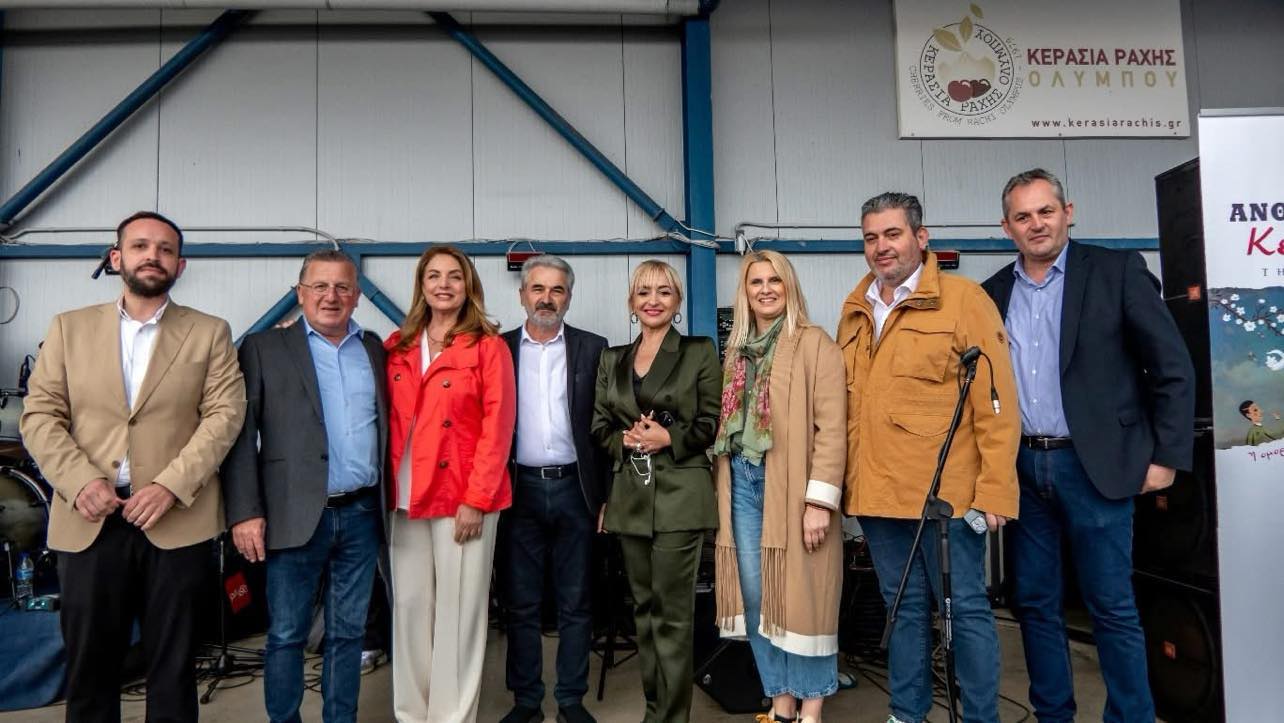
The familiarization trip for journalists and travel agents was organized by the Tourism Office of the Regional Unit of Pieria, in collaboration with the Pieria Tourism Development and Promotion Organization (POTAP), as part of the “Blooming Cherry Trees of Pieria” initiative. This two-day event, held on April 5 and 6, brought together the Regional Unit of Pieria, the municipalities of Katerini and Pydna-Kolindros, the Pieria Chamber of Commerce, and the Rachi Agricultural Cooperative “Saint Luke.”

The guests were welcomed by Ms. Sofia Mavridou, Deputy Regional Governor of Pieria, who noted:

“In the Regional Unit of Pieria, showcasing our region’s unique advantages is always high on our agenda. That’s why we actively support major events in Pieria such as the ‘Blooming Cherry Trees’. With our archaeological and religious monuments, beautiful natural setting, opportunities for outdoor activities, and distinctive local flavors, Pieria offers a broad spectrum of experiences. Our constant goal is to establish Pieria as a year-round tourism destination.”

During the three-day trip, guests participated in activities that closely linked the local community with agriculture and sustainable development throughout the greater Pieria area.

The journey began among the cherry orchards, where local producers and agronomists in Kolindros presented traditional cultivation methods and old regional cherry varieties. Attendees were then briefed on the importance of these local varieties for agronomy and tradition. After the orchard visits, participants enjoyed lunch in the square of Kolindros, sampling local cherry delicacies and other highlights of the area’s rich gastronomy. A special dinner followed on the evening of Saturday, April 5, at an exemplary agritourism venue in Katerini Municipality.

On Sunday, April 6, the group visited the “Mastodontas” Nature and Human Friends Club, where they toured the Mastodon Museum of Neokaisareia—a unique treasure trove of history and natural science, perfect for paleontology enthusiasts as well as tourists seeking something different. The day continued with activities at the Rachi Agricultural Cooperative “Saint Luke,” emphasizing the value of local producers working together.

Over the two-day “Blooming Cherry Trees of Pieria” event, participants had the chance to engage with Greek National Tourist Organization President Ms. Angela Gerekou, Deputy Regional Governor Ms. Sofia Mavridou, Katerini Mayor Mr. Ioannis Ntoumos, Dion-Olympus Mayor Mr. Evangelos Geroliolios, Pydna-Kolindros Mayor Mr. Christos Kombatsiaris, POTAP President Mr. Giorgos Karalis, Pieria Chamber of Commerce President Mr. Konstantinos Pitsias, Rachi Agricultural Cooperative President Mr. Dimitris Ntouros, Katerini Deputy Mayor for Tourism and Culture Ms. Elina Diamantopoulou, Pydna-Kolindros Deputy Mayor for Tourism Ms. Maria Navrozidou, and POTAP Director Mr. Vasilis Dimou.

The trip concluded on Sunday afternoon, with the visiting journalists expressing their enthusiasm for the breathtaking “Blooming Cherry Trees” spectacle that Pieria has to offer.


Discovering Tzoumerka | A Destination for Every Season

Discovering Tzoumerka | A destination for every season

“Gini vinis to locu nostros!” that means “Welcome to our land, let’s have a great time!” was the greeting we received in the Vlach dialect from Mr. Giorgos Pappas, Deputy Mayor for Tourism and Health of North Tzoumerka, setting the tone for our journey through breathtaking Tzoumerka.

“Tzoumerkohoria are around 47 villages, built between the 14th and 15th centuries, stretching from northern Arta to southern Ioannina. These villages are nestled among fir forests, plane trees, and chestnuts—untouched nature, traditional settlements, stone-built houses, churches, caves, and waterfalls make up a mosaic that everyone should visit at least once,” Mr. Pappas shared, adding:

“Next to Tzoumerkohoria are the Katsanochoria, made up of 11 villages, the most famous being Kaletzi, Elliniko, and Plaisia. Each one hides its own little paradise, completing a puzzle defined by unspoiled natural beauty, honest people, and unpretentious hospitality.”

The history of this captivating area stretches deep into time, inviting visitors to explore every facet.

Traditional Cuisine at Tzoumerka Tavern in Ktistades

In a stone-paved square with views of lush hillsides, the “Tzoumerka” tavern in Ktistades, near Pramanta, serves hearty local dishes, meats, classic pies, and fresh salads. The shade of a grand plane tree outside creates the perfect spot to enjoy a meal with the sounds of nature all around.

Tour of Anemotrypa Cave—the Whitest Cave in Greece


Only 3 km from Pramanta, hidden on a mountain slope at 900 meters elevation, lies Anemotrypa Cave—a natural masterpiece nearly 15 million years old and the only Greek cave with a river running its full length.

 The cave has three levels, with air temperature a steady 19°C and water at 10°C.

 Beautifully shaped, colorful stalagmites and three lakes—shades of grey, bronze, and white—form a dreamlike setting.

Coffee at the Luxury Horizons Hotel in Tsopela, Pramanta

Surrounded by cedar and fir forests at 1,000 meters, Horizons Hotel sits at the foot of Mt. Strongoula, just 1.5 km from Pramanta village.

 The hotel’s large glass windows in the café and restaurant open onto sweeping views—sometimes lush green, other times snow-white—of the Tzoumerka peaks. Guests can relax with coffee or drinks in the atmospheric lounge at any hour, enjoy a buffet of homemade treats, and browse the hotel’s book collection.


Syrrako: Greece’s Largest Stone Village

At 1,150 meters on a slope of Mt. Lakmos stands Syrrako, overlooking the Hroutsia river gorge and facing the Tzoumerka peaks. This village retains its classic Epirus stone architecture: stone houses with schist roofs.

 In 1975 it was classified by the Ministry of Culture as a settlement of natural beauty, and later as a protected traditional village. The main building materials are hewn stone for walls and slate for roofs—many houses are large and elegant, a testament to Syrrako’s prosperity in the past.

Cars are forbidden inside the village, preserving its original character. Vehicles stop at the entrance, where a stone bridge links to the road; there is also a peripheral road into the village that does not disturb its charm.

Visiting the Poet Kostas Krystallis Museum in Syrrako

In the heart of Syrrako is the childhood home of Kostas Krystallis (1868–1894), poet and writer, now a folk museum and library.

Along with his personal items, the museum displays artifacts such as traditional costumes, photos, and tools for making cheese and textiles.

Guide Mr. Kostas, staff in hand and with a love for his homeland, brings history to life. In the courtyard stands a bust of the poet.


Dining at “O Stavraetos” Tavern

The “O Stavraetos” tavern is Syrrako’s first tourist business, opened by Vasilis Vaitsis in 1976 and still run by his family.

Local livestock and cheese-making are central to Syrrako’s cuisine; every table offers a variety of cheeses—fried graviera, kefalotyri, galotyri, baked feta—and traditional pies passed down through generations.

Stay at “Old School” in Syrrako

Syrrako’s old school, standing for more than a century and now designated a modern monument, has been lovingly restored as a boutique hotel by Matina Loli and Vaggelis Giotopoulos (vice president, Ioannina Hoteliers Union).

 “Construction began in 1925, finished by 1929. It’s the only classified building in the region with a zinc roof, and made entirely from 80-cm thick stone. It served up to 400 students before closing in 1980. From 1980 to 2000 it was empty, then briefly a hostel, but it truly came back to life just recently.”

 Today, the hotel offers stylish rooms in soothing colors—perfect for unwinding after exploring.

Enjoy a traditional Epirus breakfast in the hotel’s garden: Syrrako yogurt, local “Galazoula” honey, fresh tea, homemade jams, pies, and cakes crafted by Matina.


Rafting in the Arachthos Gorge with Via Natura

Myth says in ancient times three siblings—serious Arachthos, beautiful Salabria (modern Pineios), and wild Aspros (modern Acheloos)—roamed Pindos mountains, their story woven into the area’s rivers. When Aspros realized his beloved sister was missing, he rushed through mountains and gorges, while Arachthos wandered grieving across Epirus. Eventually, Arachthos reached the Ambracian Gulf, where, consumed by loss, he threw himself into the Ionian Sea.

Tzoumerka is ideal for outdoor pursuits year-round: rafting, hiking, climbing, cycling, archery, and more. The expert Via Natura team provides all the gear—wetsuits, helmets, shoes, lifejackets—and guides every step of the way for a safe, unforgettable adventure suitable for all ages.

Plaka Bridge

The rafting route from Politsa to Plaka Bridge (about 12 km, difficulty level 3, duration 2 hours) is the most scenic navigable stretch of the Arachthos and perhaps the most striking in Greece.

Plaka Bridge, built in 1866 and rebuilt in 2019, is the largest single-arch stone bridge in the Balkans and the third largest in Europe. Don’t miss a stop at the Klifki Waterfall, with its turquoise, refreshing waters—a landscape straight out of a fairytale.


Lunch at the Renowned Boutzas Tavern in Pramanta

Behind St. Paraskevi church, on the village square, the Boutzas family tavern has been a culinary landmark since 1957, serving exceptional meats sourced from their own butcher shop: local cuts, lamb kleftiko, stewed mutton, kokoretsi, grilled mutton, lamb chops, galotyri cheese, and classic pies.

Exploring and Dining in Kalarrytes Village

Built into a sheer rockface lies the Holy Monastery of Kipina, on the way to Kalarrytes village.

Founded in 1212 and set in gardens tended by its monks, the monastery flourished in the 18th century, known for its social role.

In 1817, after a refusal by Syrrako locals to send a girl to Ali Pasha’s harem, the monastery was transferred to Kalarrytes, whose location and defenses helped it survive raids.

 Access is via a rocky path and a small wooden drawbridge that monks once lifted to protect against invaders.

After wandering Kalarrytes’ cobblestone alleys, visitors gather on the main square for coffee, drinks, food, and conversation.

 Elderly locals still speak the Vlach dialect and proudly pass it to younger generations.


Next to the square sits the private Anghela Ch. Golfanopoulou folklore collection, housed in the old Kostadimas mansion and filled with regional treasures, where retired teacher Katerina Mousafiri–Golfanopoulou welcomes guests.

The tour ends with a meal at “O Baros” grill house on the main square, featuring traditional pies, local cheeses, oven-baked giant beans, and handmade desserts.

Exploring Elliniko Village—An Open-Air Art Museum

Visit the Theodoros Papagiannis Museum of Contemporary Art and Tzouka Monastery

The entire route, from Elliniko’s entrance up the hill to Tzouka Monastery, is adorned with works by sculptor Theodoros Papagiannis, blending tradition, memory, and art.

The Museum of Contemporary Art, founded in 2009 in the village’s old school by master builders with funds from benefactor Nikolaos Mantelopoulos, hosts works by Papagiannis among the few Greek artists working with a wide array of materials, often recycled or salvaged. His pieces reflect people, traditional trades, and the region’s intellectual spirit—all shaped by his deep personal history.

Continuing northeast 3 km from the museum, the impressive Tzouka Monastery sits at 760 meters, a superbly preserved complex set high atop a nearly vertical rock, gazing across the Arachos Gorge.

 Tradition says Emperor Isaac II Angelos founded it in 1190; destroyed in 1736, it was rebuilt in 1779. Legend holds that a miraculous icon of the Virgin repeatedly moved itself to the hill, indicating the site for the monastery.

“Tsiouka Analta” in Vlach means “high peak,” echoing its lofty setting. Behind the monastery, visitors can admire the spectacular Arachos Gorge, famed for its natural beauty.

Dining at “O Ntouskos” Tavern in Elliniko

A few steps from the Papagiannis Museum, on a raised square beneath towering plane trees, “O Ntouskos” tavern serves authentic traditional fare—local meats, galotyri cheese, bougiourdi, regional pies, and delicious sweets, all in a warm and inviting setting overlooking the stunning local landscape.

Corinthia: An enticing destination with a unique history for quality holidays

Corinthia: An enticing destination with a unique history for quality holidays


Starting from Ancient Corinth, our tour began in one of the most historic places in Greece.
Visit to Tenea at the Archaeological Service offices for a presentation of excavation findings.

Between the two villages of Chiliomodi and Kleinia lay the important city of Tenea.

According to Pausanias, its first inhabitants were of Trojan origin, captured by the Greeks on Tenedos and brought there as prisoners. Agamemnon allowed them to build homes. Virgil, on the other hand, claimed that both Tenea and Rome were founded by Trojans. According to myth, it is also the place where Polybus raised Oedipus.

The first significant find of the area is the Apollo of Tenea, or otherwise the Kouros of Tenea. The famous statue of the 6th century BC, excavated in 1854. In 2010, two more kouroi were found at a site where an extensive cemetery was revealed, crossed by an ancient road and dating to the 6th, 5th, and 4th centuries BC. Today, the two kouroi are exhibited at the Archaeological Museum of Ancient Corinth.

In the systematic excavation that began in 2013, led by Dr. Korka, an organized cemetery was identified around the 1984 burial, dating from the 6th to the 3rd century BC.

In 2018, remains of the city’s residential fabric were uncovered for the first time, with rich findings. In an area of 672 sq.m., roofed spaces with door openings were excavated, organized around internal courtyards. The archaeological research also revealed a unique for Corinthia two-chambered above-ground funerary monument dating to the 1st century AD, with its period of use extending to the 4th century AD.

This remarkable archaeological discovery was listed among the major historical and archaeological events of 2018 by the History network website.

Beyond the finds, another factor that makes this excavation unique is the relationships that developed between the local community and the members of the research team, leading to the creation of the “Friends of Ancient Tenea” association. A society that played a crucial role in the success of the entire program.


Stephanion Observatory


The observatory was founded in 1967 in Stefani, Corinthia, on the “Dragatoura” hill, following the interest of foreign scientists and the active support of local residents.

This observatory (Stephanion Observatory) is the first modern observatory in Greece. Between 1967 and 1973, many rising scientists passed through Stefani, who later became world-renowned astronomers, such as the Dutch Jan van Paradijs, a NASA researcher and one of the top astrophysicists in the world.

The first modern telescope in Greece and one of the largest of its time in Europe, the 30-inch reflecting telescope, was installed on 25.06.1971 in a shelter at the site, charting a new course for the Stephanion Observatory and for Greek astronomy in general.

The Cultural and Educational Association of Stefani, in collaboration with the Astronomy Group of the KEPAK of the Municipality of Corinth, frequently organizes Astronomy nights and parallel events at the Stephanion Observatory.

 
Lunch at the traditional tavern “Velanidia” in Stefani, Corinthia

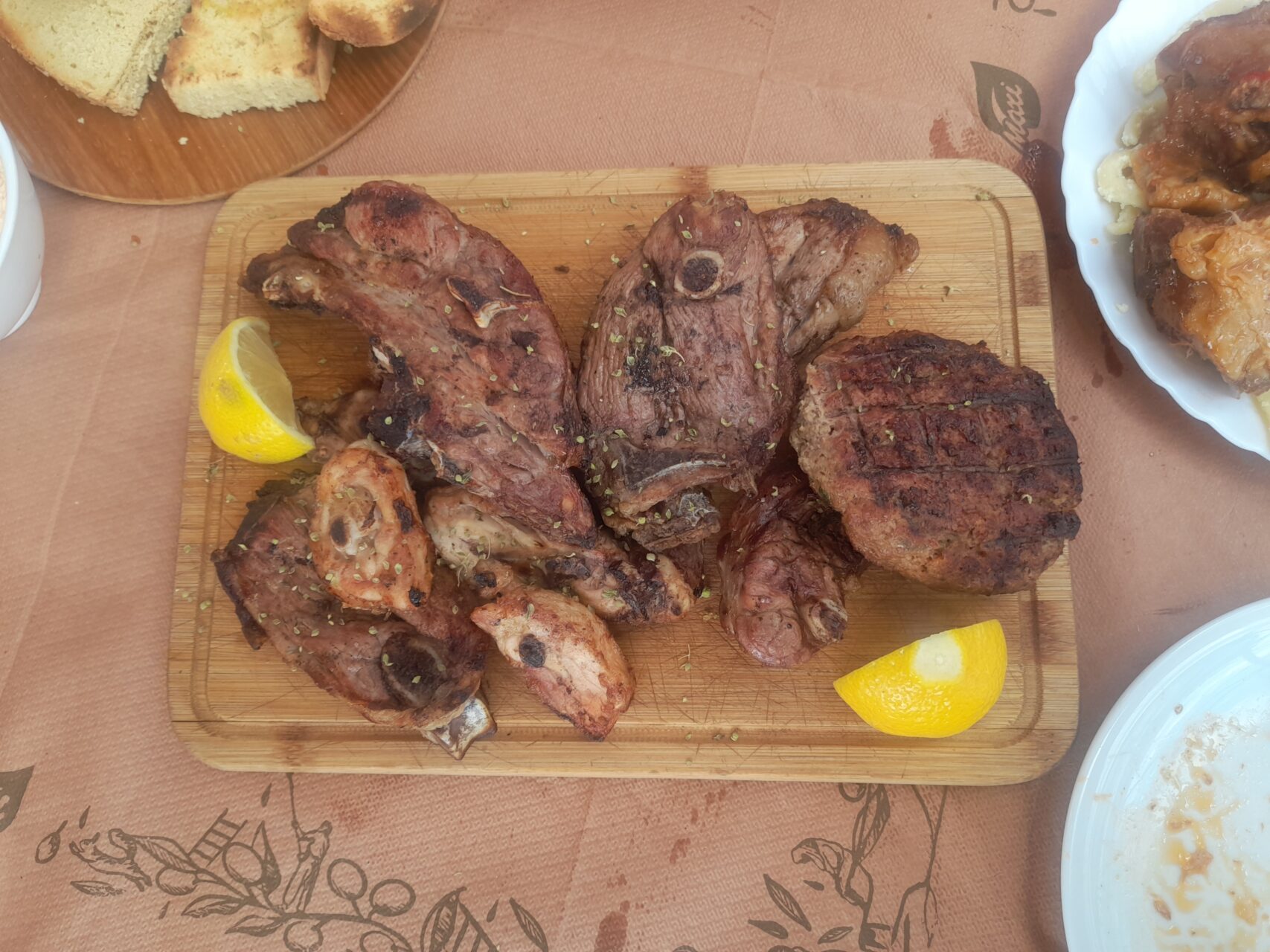
A gastronomic paradise for food lovers. For those who appreciate good grilled meat, an outing to Stefani, Corinthia, and specifically to the tavern Velanidia, is a unique culinary experience!

Local meats, friendly service, generous portions, homemade bread baked in a stone oven served with local olive oil and oregano, marinated wild boar chops, meatballs in two delicious versions (lamb and ewe), as well as huge juicy beef steaks.

 
Dinner at KAZE

A unique experience of a summer escape from the urban landscape, at the most seaside point of the city.

The new vibe that KAZE brings to the Kalamia beach of Corinth runs through its entire operation and is reflected in the service, design, and menu.

With a design inspired by the natural environment, it welcomes you warmly throughout the day, making it the ideal destination to enjoy refreshing cocktails and selected gastronomic options by the sea.


Traditional breakfast in the village of Solomos, Corinthia at “Pietris” Bakery – Tasting of local delicacies

Almost five decades have passed since two self-made men decided to create the first wood-fired oven on the ground floor of their house in Solomos, Corinthia.

Today the third generation, faithful to the technique of bread-making (the sourdough loaf of Solomos), has managed both to preserve the store in Solomos and to expand, developing new activities in Attica and Corinthia.

From 1995 to today, the name Pietris became a “brand name” in the production of bakery and pastry products, continuing the tradition while keeping up with modern technology and organization. Day by day, with much effort and persistence, the family bakery grew into a bakery industry, acquiring its current legal name “Hellenic Bakery” and based in Corinth near the Isthmus.


Visit to the Ancient Port of Lechaion

The port of Lechaion was the main harbor – seaport of Ancient Corinth, a marvel of know-how and technology, first imitated by the Carthaginians and later by the Romans. It was named after Leches, son of Peirene and Poseidon. It is located on the Corinthian Gulf and was connected to the city of Corinth with long walls, a total length of 2,300 m. Between the walls lay the famous Lechaion road.

The port, which had two sections, the commercial and the naval station, was entirely artificial. It had three inner harbor basins and three outer ports. The excavated earth was heaped into two mounds, ensuring protection of the inner basins from the strong northern winds, which still exist today.

Along the ports, stone piers, moles, breakwaters, ramps were constructed, with a total length of 7 km, as well as a large number of warehouses and other port facilities for the thousands of tons of goods to and from the colonies of Corinth, and in the southwest a huge number of shipbuilding facilities, where triremes were built on behalf of other city-states, creating the first naval war industry, resembling that of today.

 
“The Lechaion Harbor and Settlement Land” Project

The general goals of the Lechaion Harbor and Settlement Land Project aim to document and preserve the site of Lechaion in order to:

  1. improve our understanding of the chronology of occupation at the port,
  2. document Greek and Roman harbor design on site,
  3. test theories of Roman colonial foundation practices,
  4. better understand the economic structures of diachronic trade in a Mediterranean maritime hub, and
  5. further improve our understanding of the destruction and abandonment of the site to identify environmental and social pressures that outweighed the need and usefulness of occupying one of antiquity’s most strategically located ports.

The excavation is conducted in 4 areas: AREA A, B, C, D.

The excavation of Area A will contribute to refining the chronology and occupation of the site, as most of our older finds (Mycenaean, Geometric, and Proto-Corinthian) come from within and around this building.

In this area, a human skeleton was uncovered, apparently a woman in her 20s. This is remarkable for several reasons. First, it does not appear to be a tomb but rather that she was crushed during the collapse of the building’s roof. Her chest was broken, her left arm raised apparently to her face, and her right arm behind her. So far, the lower part of her body has not been found. From the pelvis down she is missing. If she was indeed crushed by the collapsing roof, this may confirm that an earthquake in the late 5th century AD led to the abandonment of the harbor.

The ongoing excavation is critical and necessary not only because we are excavating a settlement now known to include fortification walls and a large circular building (Mausoleum – Area D, where sarcophagus fragments were found), neighborhoods, roads, and numerous structures, but also because we believe, based on excavation data, that the Roman settlement at the harbor—and not the famous city on the hill, Ancient Corinth—was the first focus of colonial activity. (In Area C, a two-phase Roman basilica is under excavation.

The best-preserved building dates to the Neronian/Flavian period, while the earlier remains are from the Augustan era. The presence of two early Basilicas at Lechaion currently fuels hypotheses about the initial location of the Roman colony’s administration). The harbor of Lechaion was a major hub for travelers, armies, goods, and new ideas circulating through the multicultural Mediterranean system.

The construction of the Diolkos, to facilitate transport between the Corinthian and Saronic Gulfs and thus between the western and eastern Mediterranean, demonstrates an early and profound understanding of the strategic connectivity between land and sea.


Project: The Lechaion Harbor and Settlement Land Project

A collaboration of the American School of Classical Studies with the Ephorate of Antiquities of Corinthia, under the direction of Professor George Spyropoulos, Deputy Head of the Ephorate of Antiquities of Corinthia, with co-director Professor Paul D. Scotton of California State University Long Beach. The research involves, among others, Dylan Rogers of Florida State University and former Deputy Director of the American School of Classical Studies, Katherine Harrington of the National Science Foundation, etc.

Sources:
https://lechaion.org/
https://www.archaeological.org/fieldwork/lechaion-harbor-and-settlement-land-project/


Transfer to Kalamia Beach, swim at the beach.

Moments of true relaxation in the most idyllic environment.

The large organized beach of Corinth with easy access and parking, where you can swim carefree and safely under the watchful eye of our lifeguard team. Sand and pebbles, shallow waters, and a magical sunset. Just above, many cafés, tavernas, souvlaki shops, and all-day bar-restaurants offer anything you may desire.

Kalamia Beach has been included since 2021 among the awarded Blue Flag beaches. A beach that last year raised the bar very high, aiming for European recognition.


Light lunch at Montezuma & wine tasting with award-winning organic wines from Manolakis Winery

In the early 2000s, Dimitris and Thanasis returned to their homeland, Agios Vasileios in Corinthia, and united their dreams. With love for nature, they began cultivating their own organic vineyards. With passion, they created a small winery, and over the years they began to grow their business.

With the vision of highlighting the quality characteristics of the Greek vineyard and creating a distinctive identity for the products of Corinthian land, in 2002 they produced their first organically grown wine.

Today, the Manolakis estate continues to be based on the family’s love for high-quality wines, as well as the ambition to showcase the uniqueness of Corinthian wine.


Tour of the Ancient Port of Cenchreae and the point where the Apostle Paul’s journey begins

This was the second harbor – seaport of Ancient Corinth, where innovative methods of harbor construction were also applied. It too had two sections, commercial and military. It was named after Cenchrias, twin brother of Leches, son of Peirene and Poseidon.

This harbor was partly natural, with north and south capes, and partly artificial, with two breakwaters built in extension of the capes—30 m high from the seabed, shaped like a horseshoe—creating a large harbor basin with an entrance 120 m wide. The maximum width of the harbor was 280 m, and the maximum distance from the central mole to the breakwaters at the entrance 210–215 m. On the northeast side, a pier 17 m wide and 106 m long was built, with another opposite of similar width and about 170 m long.

In the area, simultaneous subsidence of the land and rise of the sea occurred, with the result that Roman buildings now lie at sea level, while archaic and classical ones are below it. Extensive archaeological excavations at the harbor have revealed a wealth of information and many finds, the rarest being a series of glass tesserae panels (precursors of today’s stained glass), kept at the Isthmia Museum.

At the harbor, beyond the extensive warehouses, shops, and public buildings, which flourished especially during the Roman era, a temple of Aphrodite, of Isis, and early Christian churches were discovered.

From this harbor, Apostle Paul traveled to Rome during his great missions for the spread of Christianity.

Apostle Paul, one of the most important figures of early Christianity, visited the city of Corinth three times, and his “Letters to the Corinthians” are outstanding examples of Christian discourse. Today, Apostle Paul is the patron saint and protector of the city.

 
Visit to the Thermal Springs of Oraia Eleni with a long history spanning many years

The therapeutic action of its waters was known to the local inhabitants, and it is no coincidence that in summer (as the waters there are very cold) the spring becomes a meeting point for many women (mostly) of different ages, who enjoy their bath or wait in line to sit under a rock. This is because at this spot they experience one of the most beautiful and powerful natural hydromassages. An unforgettable experience.

The water of the thermal spring of the Oraia Eleni Baths gushes from three points at the base of a rock, right next to the sea.

The natural resource “water of the Oraia Eleni Baths” has a temperature of 20.1°C. The spring’s water flow is 100 cubic meters per hour, and the natural resource is classified and identified as hypertonic, chlorinated, sodium-rich, calcium-rich, bicarbonated, strontium-rich, brominated, boron-rich, alkaline, hypothermal mineral water.

The water of the Oraia Eleni springs can be used for balneotherapy and is indicated for diseases of the musculoskeletal and nervous systems, diseases of the peripheral vascular system, as well as dermatological and gynecological conditions. At the same time, the water of the thermal springs is contraindicated for infectious diseases, systemic and malignant diseases, as well as liver and kidney failure.

The Mayor of Corinth stated:

“The hospitality of journalists in the Municipality of Corinth, within the framework of the press trip, is an important initiative for the promotion and development of our region. Through their experiences and publications, we will be able to highlight our rich cultural heritage, natural beauty, and the unique tourist opportunities that the Municipality of Corinth offers. Our vision for modern Corinth is to become a destination that combines history with modern infrastructure, offering visitors a complete and unforgettable experience. I am confident that our cooperation with the media will contribute significantly to achieving this goal.”

The Deputy Mayor of Tourism and Education, Mrs. Dimitra Tsouloucha, stated:

“We are excited to have had the opportunity to host distinguished journalists in the Municipality of Corinth. Through this initiative, we aim to showcase the rich culture, history, and natural beauty of our region, strengthening tourist promotion and development for 2024.”.

Western Greece. An “epic experience” for every visitor!

Western Greece. An “epic experience” for every visitor!


Starting from the “GRAND ELIS RESORT” in Savalia, Ilia, our tour began with two of the most important destinations of Western Greece, Ilia and Achaia.

In the western part of the Peloponnese, in an oasis of peace and serenity by the sea, in the area of Savalia, overlooking the island of Zakynthos and next to an 85,000 sq.m. pine forest, lies the Grand Elis Hotel Spa Resort, an idyllic five-star luxury hotel for dream holidays in the Peloponnese. A place where the vitality and beauty of nature spark the imagination and awaken the senses.

The brand-new eco-friendly complex, where the blue of the sea and the green of the nearby forest and its gardens dominate, offers luxurious accommodation in line with the highest standards of hospitality.

With 82 luxury rooms and suites, across three buildings, the Grand Elis Hotel Spa Resort guarantees the optimal holiday experience. Natural light and the magnificent views of the sea, the lush gardens and the large pool, the exceptional architecture and modern amenities together create the ideal setting for moments of relaxation and rejuvenation.

Guests can unwind on comfortable luxury loungers by the pool, enjoying the sun and refreshing cocktails for a revitalizing experience. Alternatively, they can enjoy the hotel’s private beach with its renowned golden sand and the crystal-clear waters of the Ionian Sea, for an equally exciting experience from the early morning hours until sunset.

More at: https://www.grandelishotel.gr/


Welcome dinner at the “GRAND ELIS RESORT”.The Gastronomic Identity of Grand Elis is directly linked to local – thematic gastronomy and the products that highlight it.

At Grand Elis you will not simply discover the richness of Greek cuisine, but embark on an unforgettable culinary journey “from the fields of our land to your plate.”

Every dish carries the taste of the local. Wonderful dishes, prepared with exceptional care, invite you to discover the quality of the local products of Ilia’s fertile and abundant land. From local olives cultivated by small producers and the olive oil, to seasonal fruits and vegetables, meat and seafood, and fresh greens.


Tour of the Achaia Clauss winery, the oldest winery in Greece
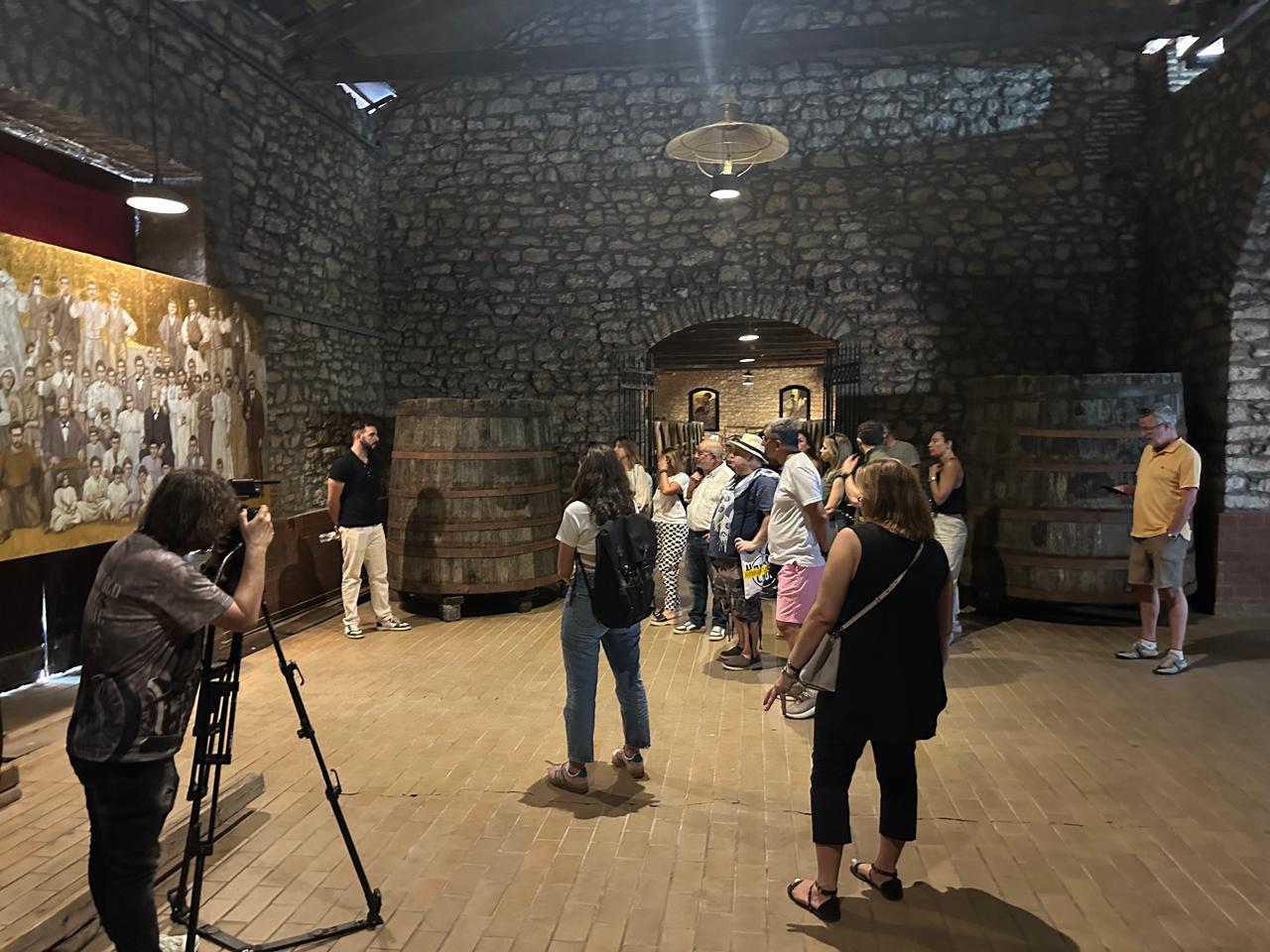
This is a historic winery, founded in 1891. Today its products are produced in state-of-the-art facilities, a few kilometers away from its original site. A true oasis, it passes on its beauty, tradition, and history through time, to the thousands of its visitors and to those who love and care for the preservation of its unique identity.

Achaia Clauss is a page from our region’s history that stubbornly refuses to grow old, retaining all the freshness and aroma of the adventures that unfolded since 1854, when the rebellious young bohemian Gustav Clauss challenged the customs and social status of his time, gradually creating Greece’s oldest Wine Ambassador to the world, leaving indelible marks on the history of winemaking. In 2018 it founded a Wine Club.


Visit to the Archaeological Museum of Patras

The Archaeological Museum of Patras is located at the northern entrance of the city and housed in a building constructed in 2008, designed by architect Theofanis Bobotis. It covers a total area of 5,955 sq.m. and includes three large halls for the permanent exhibition, one hall for temporary exhibitions, modern reception and visitor service areas, an auditorium, refreshment facilities, conservation laboratories, storage rooms, and an outdoor area that also serves as a parking lot for visitors’ vehicles.

The museum’s permanent exhibition features finds dating from the 4th millennium BC to the 4th century AD, originating from the city of Patras as well as from areas of southern and western Achaia.


Lunch in the Kourouta area, Axilleion Mare Restaurant
In the heart of Kourouta is located the seaside tavern “Axilleion Mare Restaurant.” The locals call it “Dino,” a nickname that has accompanied its owner for many years.

At “Axilleion Mare Restaurant” you will find delicious pot roast and the best homemade meatballs, a variety of traditional cooked dishes, and above all, fresh fish.


Kalavryta Ski Center_ Visit to the Helmos Festival 2024
https://festival.kalavritaski.gr/programma/#scedule

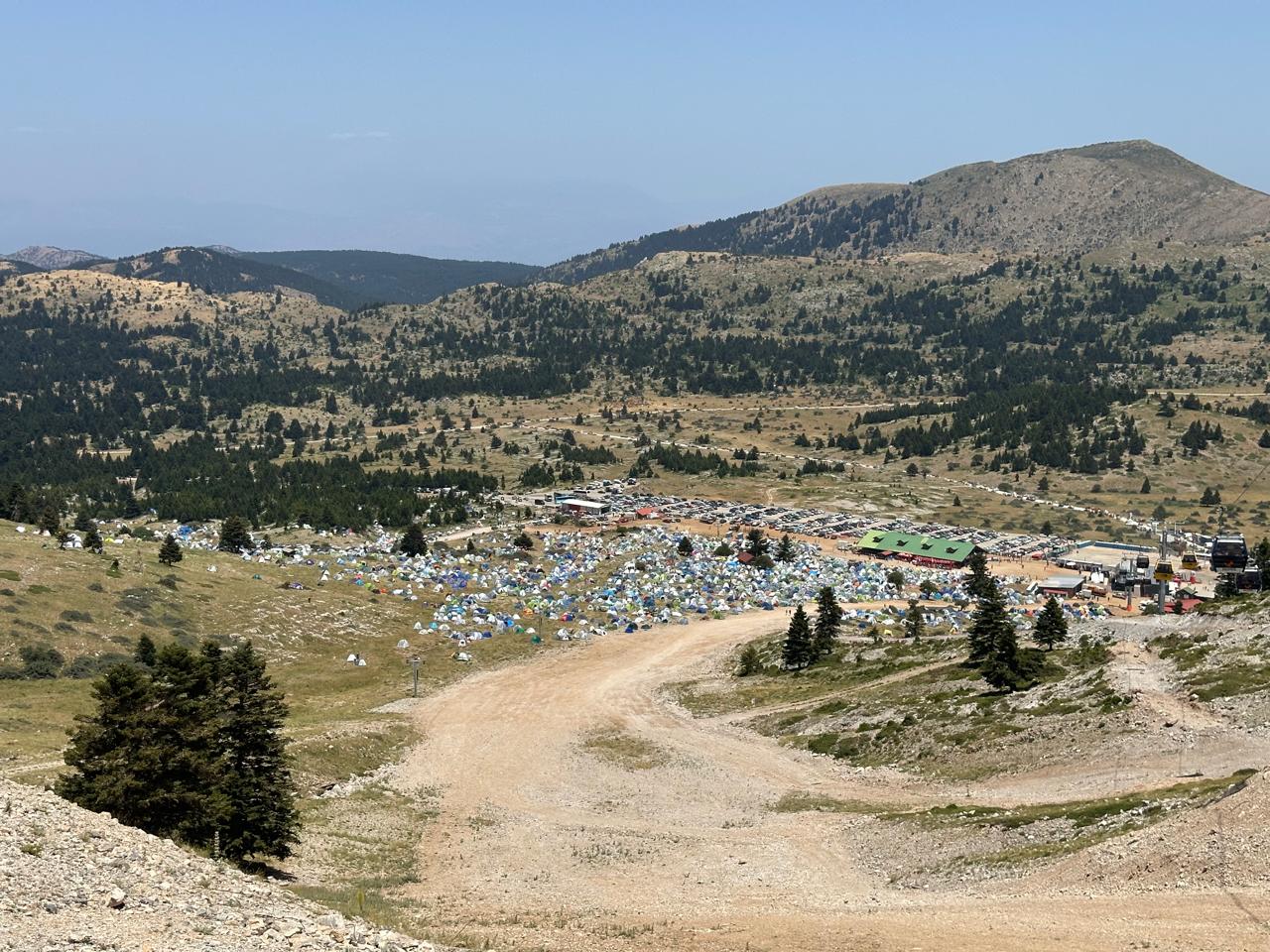
The first festival of outdoor activities and music that marks the start of summer, held in the heart of the Helmos-Vouraikos National Park and UNESCO Global Geopark, at the Kalavryta Ski Center.

An event that redefines the horizons of Greek festivals, broadens the scope of mountain sports and recreation centers, and gives the wider public the opportunity to discover the mountains of Greece in an exciting way, filling the participants’ bags with unique moments and powerful emotions.

The Kalavryta Ski Center is the first ski resort to host an event of this scale, providing both economic relief and new perspectives for a municipal enterprise that has been steadily developing in recent years.

One of the primary aims of the event is the harmonization of humans with the natural environment. To achieve this, a series of outdoor activities and parallel events are organized for both children and adults. The vision of the organizers is for Helmos to become “a mountain for everyone,” a home for thousands of campers who have the opportunity to stay in specially designated camping areas, and for three days the foothills of Helmos to become their home.

All this with the sole purpose of showcasing while also protecting the wider area of Helmos, which is part of the Helmos-Vouraikos National Park and UNESCO Global Geopark.


Visit to the Holy Monastery of Mega Spilaio

The most extraordinary religious pilgrimage of Orthodoxy in the Peloponnese is the Holy Monastery of Mega Spilaio, which inspires awe as it stands against a steep rock face at an altitude of 940 m. It took its name from the vertical rocky complex of Helmos on which it was built. Today, eight stories high, it rises “clinging” to the rock, impressing even the most indifferent visitor.

The katholikon of the Monastery, carved into the rock, is a cross-in-square church with two narthexes. The main church has frescoes from 1653, remarkable marble inlays on the floor, a carved wooden iconostasis, and more.

The Deputy Regional Governor of Tourism Development of the Region of Western Greece, Mr. Panagiotis Sakellaropoulos, referring to the unique beauties of the destination, stated among other things:

I am truly excited and happy about the organization of this trip, which took place as part of the annual tourism promotion activities of the Region of Western Greece 2024, as it gave us the opportunity to guide our distinguished journalist guests through beautiful places of the Olympic Land.

Our goal was to introduce them to points of interest in our wonderful land, so that our visitors would become partakers of the experience, be sensitized to our places, and pass on their impressions to their readership, television audience, and digital followers.

Within this framework, our esteemed guests toured the historic Achaia Clauss winery, admired the unique exhibits of the Archaeological Museum of Patras with its contemporary architectural aesthetic, and visited the state-of-the-art Kalavryta Ski Center and the Holy Monastery of Mega Spilaio.

This initiative is, for us, a highly effective tool that directly enhances the attraction of more visitors from Greece and abroad, so that others too may enjoy the unique experiences and knowledge gained by our guests during this short visit to the Olympic Land of our hearts!

New initiative by P.O.T.A.P. with a three-day press tour of leading media in Pieria

New initiative by P.O.T.A.P. with a three-day press tour of leading media in Pieria

Believing that the power of journalism is an important lever for promoting and highlighting the comparative advantages of Pieria, the Pierian Organization for Tourism Development and Promotion (P.O.T.A.P.) invited, hosted, guided, and informed representatives of the country’s leading nationwide media outlets.

On March 8–9–10, 2024, the Organization’s initiative was carried out with a series of on-site visits by journalists to areas and institutional bodies of Pieria that reflect not only the tourism identity but also the broader character of the region.

Based in a hotel unit in Leptokarya, where the first meeting took place, the press representatives were welcomed and briefed on the operational program of the three-day tour by their hosts. The first visit took place on the afternoon of Friday, March 8, 2024, in Litochoro.

At the reception were His Eminence Metropolitan Georgios of Kitros, Katerini and Platamon, and the Deputy Mayor of Dion-Olympos, Sofia Zourzoura.

At the foothills of the mythical Mount Olympus, the tour and briefing began in the Council Chamber of the Municipality of Dion-Olympos and at the Maritime Museum with its great naval tradition, with the evening concluding with a local wine tasting—an experience dedicated to the senses.

The Saturday, March 9, 2024 program included visits to areas in northern Pieria, within the Municipality of Pydna-Kolindros, guided and accompanied by Deputy Mayor Maria Navrozidou. The day began at the archaeological site of Pydna, from where the Apostle Paul set sail on his second missionary journey.

This was followed by visits and tours of the Museum Repository of Makrygialos, with remarkable finds from the cities of Pydna and Methoni dating from the Iron Age to the Hellenistic period, and to a winery and vineyards in Kitros.

Next came an interesting stop in Aiginio, the “city of storks,” for a presentation on the “Stories of the Storks” by the Association of Professionals of Aiginio, followed by a visit to Kolindros to explore the local Folklore Museum, the Holy Monastery of Saint Athanasios, and the churches of Saint Paraskevi and Saint George.

On the third and final day, Sunday, March 10, 2024, the media delegation visited, in the morning, the headquarters of the Olympus Festival Organization, where they were informed about this nationally renowned cultural institution by its president, Mr. Grigoris Papachristos, the Deputy Regional Governor of Pieria, Ms. Sofia Mavridou, and the Deputy Mayor of Katerini, Ms. Elina Diamantopoulou.

The “journalistic tour” of Pieria concluded with visits to Elatochori and its Ski Center in the Pieria mountains, and to the traditional settlement of Palaios Panteleimonas, known as the “balcony” of Olympus, with its remarkable examples of traditional architecture.

Alongside discovering the natural, historical, and archaeological wealth of Pieria, the hosted journalists also met, were briefed, and exchanged views not only with Deputy Regional Governor of Pieria, Sofia Mavridou—who promotes and supports such initiatives—but also with the president of P.O.T.A.P., Giorgos Karalis, members of the Organization’s administration, as well as local government officials and other institutional and productive bodies of the region.

In conclusion, the Pierian Organization for Tourism Development and Promotion (P.O.T.A.P.), guided by extroversion and foresight, put into practice the modern philosophy required today in the field of information and promotion.

The three-day event, titled “Fam Trip” (familiarization trip for journalists), as a means of promoting tourist destinations, will undoubtedly contribute to the further enhancement of Pieria’s tourism, along with the respective economic and other benefits.

The Deputy Regional Governor of Pieria, Ms. Sofia Mavridou, and the President of P.O.T.A.P., Mr. Giorgos Karalis, expressed their satisfaction and gratitude to the press delegation, stating that similar initiatives will continue both within Greece and internationally.

A unique journey to the Municipality of Argos-Mycenae

A unique journey to the Municipality of Argos-Mycenae

A new destination has emerged in recent years in the Peloponnese. It is the Municipality of Argos-Mycenae, which stands as a living museum of both ancient and modern history of the country.

Today Argos blends the old with the new, with large pedestrianized areas, spacious squares, restaurants, and café-bars that stand out. Less than an hour and a half from Athens, it can easily be visited as a day trip.

With Argos as a starting point, one can explore the coastal area from Nea Kios to Kiveri, with their unique fish taverns as well as hidden gastronomic spots serving delicious traditional dishes, such as the tavern Spilia.

But the wider area, beyond the unique archaeological site of Mycenae, also holds a breathtaking monument long forgotten by history that captivates visitors. This is the Pyramid of Elliniko, with its unique magnetic field which, according to the University of Edinburgh, predates the pyramids of Egypt.

Argos, the oldest continuously inhabited city in Europe and in Greece, despite the destructions it has suffered at times from raiders and conquerors, was always rebuilt in the same location. This is confirmed even today by archaeological excavations on construction sites, which continue to reveal traces of life from earlier times.

As the oldest city of Greece, it participates in the Network of the Oldest Cities of Europe and constitutes the largest open-air museum in the country, with numerous and unique finds representing every historical period of the Greeks. It offers visitors a wealth of monuments from prehistoric and historical times, museums, historic churches and rich ecclesiastical relics, the old town, distinctive architectural features, neoclassical buildings, and more.

It should be noted that the Municipality of Argos-Mycenae was established in 2010 under the “Kallikratis” Program. It was created from the merger of six pre-existing municipalities and two communities, which functioned from 01-01-1999 until 31-12-2010, having been established in 1997 under the “Kapodistrias” Plan. These were the Municipality of Argos, the Municipality of Mycenaeans, the Municipality of Koutsopodi, the Municipality of Lerna, the Municipality of Lyrkeia, the Municipality of Nea Kios, the Community of Alea, and the Community of Achladokampos, which were subsequently transformed into Municipal Units. The seat of the expanded Municipality of Argos-Mycenae was designated as Argos, with Mycenae as its historical seat. The boundaries of the Municipality essentially correspond to the boundaries of the former Province of Argos.

Visit to the Byzantine Museum of the city
The Byzantine Museum of Argolis is housed in the western and southwestern wings of the Kapodistrias Barracks, which dominate the center of Argos.

The Barracks complex, a listed historic building, is located in a central part of the city and in close proximity to the neoclassical building of the Municipal Market and the Archaeological Museum of Argos.

Tour of the Ancient Theater/Ancient Agora
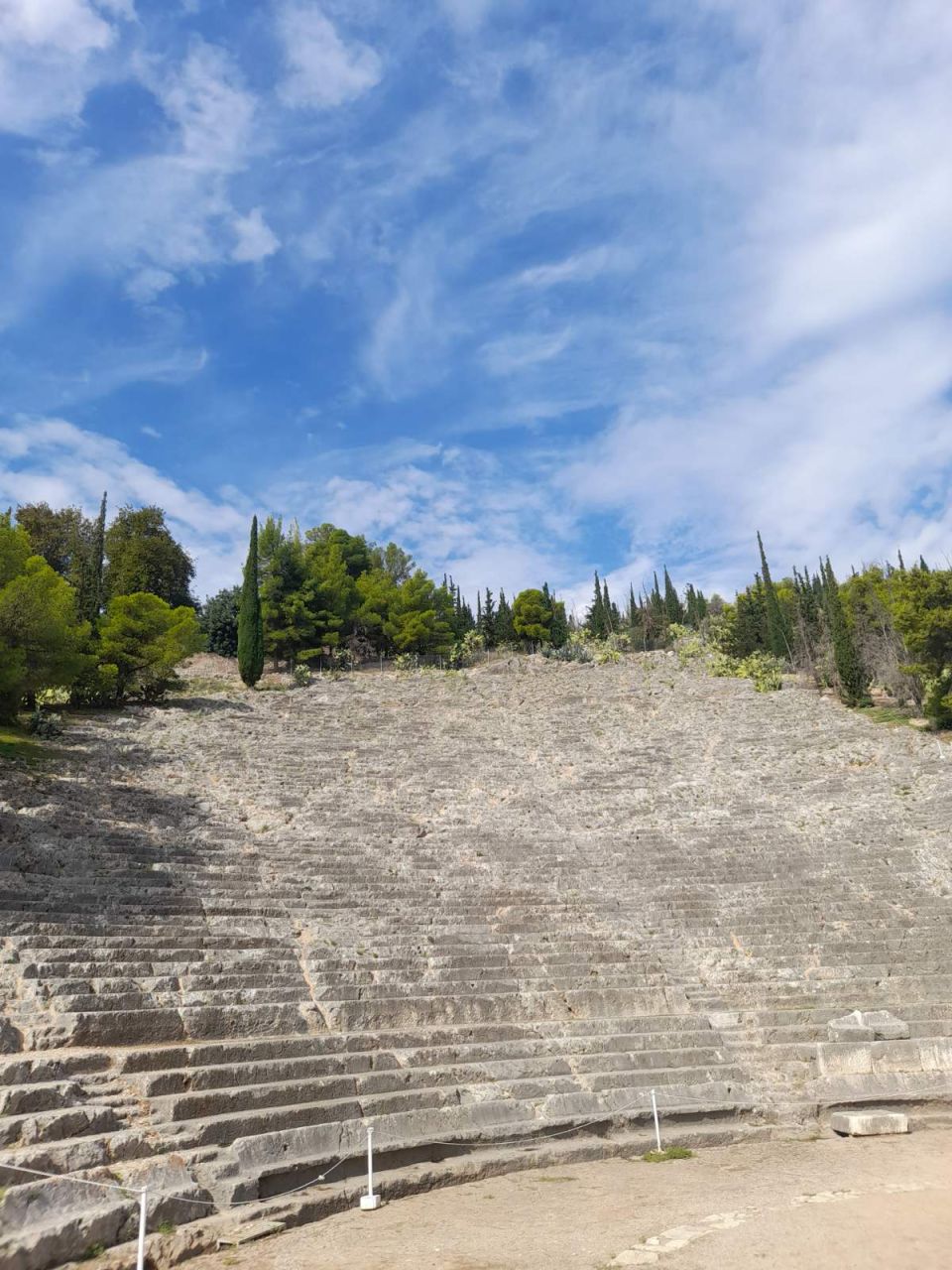
On the southeastern slopes of Larisa Hill, the Theater was founded during the Hellenistic period (300–250 BC). With a capacity of about 20,000 spectators, it is one of the largest ancient theaters in Greece. Today its capacity does not exceed 4,000 seats. Throughout its long history, it hosted the musical and dramatic contests of the Nemean Games, as well as competitions in honor of Hera. During Roman times, contests in honor of the emperor are also believed to have been established.


Larisa Castle
The history of fortifications on Larisa Hill begins in prehistoric times and extends up to the period of the Greek Revolution of 1821. Following the city of Argos through its long history, from the prehistoric era onward, it always served as a fortified observatory and the last line of defense for the city.

Kefalari
Kefalari is a beautiful village. Its houses are spread over a wide area, built among tall trees and orchards. To the west of the village rises Mount Chaon. The name is most likely derived from the verb “chaino” (to gape), because on the southern slopes of the mountain there is a cave approximately 110 meters deep. This cave was used as a refuge and dwelling by people of the prehistoric period, as shown by traces and findings uncovered by German speleologists in 1970. The cave was also used as a safe shelter during the bombings of April 1941.

Pyramid of Elliniko
The Pyramid of Elliniko (previously known as the Pyramid of Kefalari) is a rare structure which, with its imposing and dynamic form, impresses visitors. It is located on the edge of the village of Elliniko in Argolis, about two kilometers from Kefalari. According to a statement by the academic P. Theocharis, the monument was built in 2720 BC. The dating was placed in the Early Helladic III period using the scientific method of thermoluminescence.

The traveler Pausanias mentions that the monument was a polyandrium (a communal tomb of warriors) of the Kenchreans. Later scholars speculate that it was a funerary monument, or a watchtower, or even an ancient observatory, because along with another pyramid that once stood nearby, it was oriented toward the constellation Sirius. The location of the monument is of strategic importance, as it controlled the land route from Argos to ancient Hysiae and Tegea, as well as the entrance to the Argolic Gulf, and is visible to the naked eye from the ancient cities of Nafplio and Tiryns. For this reason, many believe that the Danaans used the monument as a watchtower, to observe, anticipate, and confront possible enemy attacks (fryktos = burning torch). A comparison of the monument with the ancient walls on Larisa Hill in Argos, the acropolis of Achladokampos (ancient Hysiae), or the Kritirion of ancient Argos (the oldest court in the world) reveals a close relationship among them in terms of craftsmanship and construction date.

Visit to the Archaeological Site of Mycenae
The need for a new archaeological museum to store and display the findings of over a century of excavations at Mycenae became urgent in the early 1980s, when Georgios E. Mylonas, in collaboration with the Ministry of Culture, chose the site in the northern area of the Acropolis, overcoming objections from local representatives who wished the museum to be built in the nearby settlement.

Tour of the Museum of Mycenae
The Archaeological Museum of Mycenae is located north of the Acropolis of Mycenae, within the accessible archaeological site of the same name. Its exhibits are representative samples of the life and funerary beliefs of the Mycenaeans, as well as of the achievements of Mycenaean civilization, which decisively influenced the creation of Greek civilization in historical times.