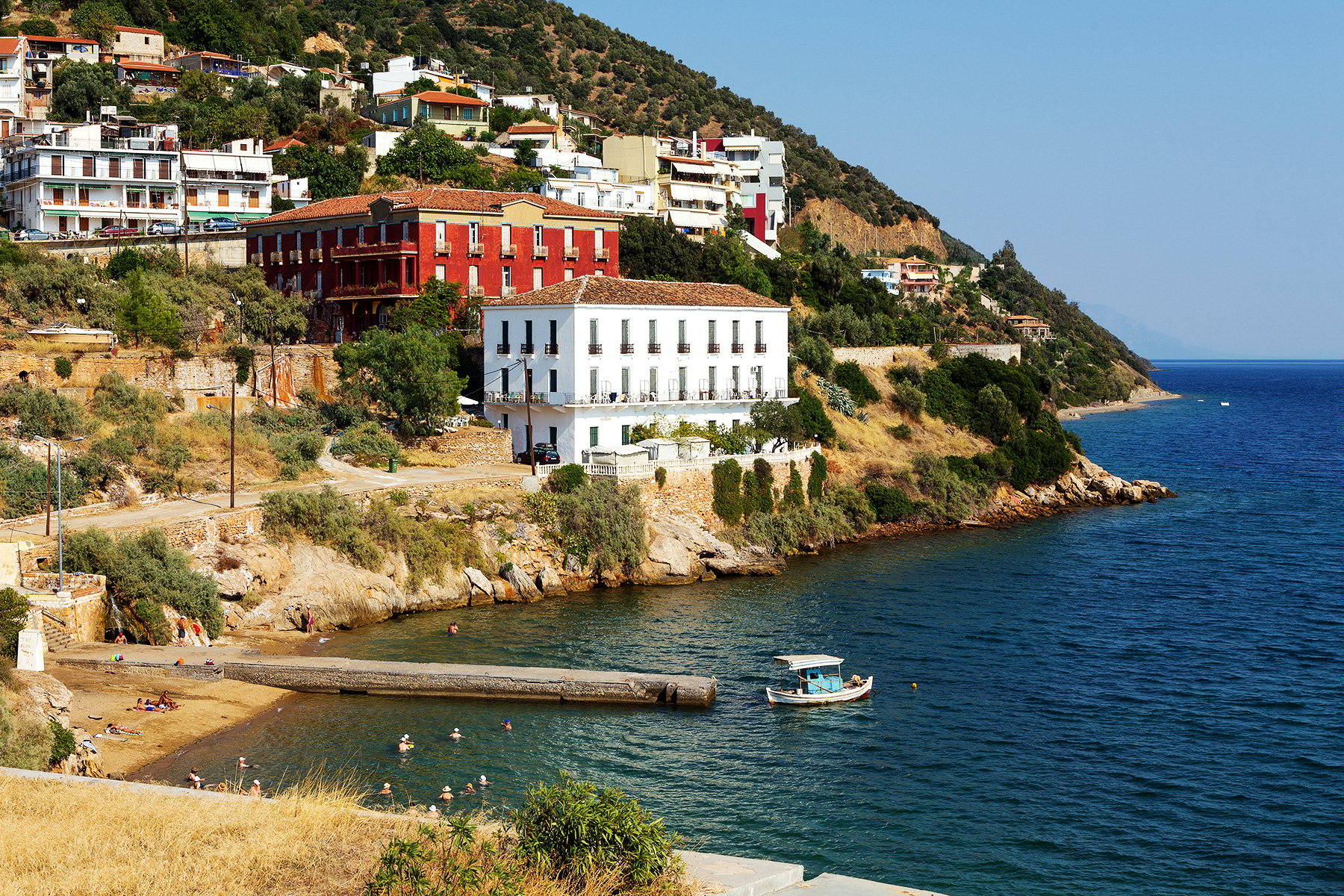
“Lesvos island, a paradise all year round”

“Lesvos island, a paradise all year round”

Lesvos has the energy to inspire you, to make you look deep inside yourself and reinvent yourself.

Such is the magnificence of this piece of land, a true Aegean mosaic with many hidden secrets that will amaze you again and again as you discover them one by one…

Lesvos is truly a hidden gem of the Aegean, waiting for you to uncover it. Starting from Mythimna, or as it is called today, Molyvos, our journey on Lesvos began with eight journalists from some of Greece’s leading media outlets.

Arrival in Mytilene, the capital of the island

The undisputed hallmark of Mytilene’s architectural identity is the exquisite mansions that adorn the town, testimony to the economic prosperity of the past. Most of them were built at the end of the 18th and the beginning of the 19th century by wealthy merchants, who, taking advantage of the island’s key commercial position between East and West, accumulated great wealth through their trading activities.

Visit to Mantamados

The charming village of Mantamados lies on the northeastern side of the island, in a valley not visible from the sea, 37 kilometers north of Mytilene. It was created by the merging of several coastal settlements in the area, as a result of repeated pirate raids during the Middle Ages.

Mantamados is renowned for its excellent agricultural and livestock products, as well as its dairy products such as Ladotyri, Graviera, fresh Myzithra and Feta cheese, and yogurt prepared in the authentic way in traditional clay pots, known as “gragoudes.” In addition, it is a famous center for pottery and folk art.

Walking through the streets of Mantamados, we discovered traditional pottery shops with potters working at their wheels, creating or painting new works of art in their renowned workshops.

Stop at the Monastery of Saint Raphael
Built on the olive-covered hill of Karyes, it is one of the island’s best-known places of worship. The present monastery was constructed in the 1960s on the foundations of an older one, which had operated during two different periods of the Byzantine era and was completely destroyed by the Ottomans in 1463.
https://www.ieramoni-agiou-rafail.gr/

Visit to the Monastery of Taxiarchis

Legend has it that the old monastery was looted by Saracen pirates towards the end of the first millennium. All the monks were slaughtered, except for a novice, Gabriel. As the pirates were leaving, the novice climbed onto the roof of the monastery to make sure they were gone. However, they spotted him from afar and returned to kill him.

At this point in the story, the Archangel Michael performed his miracle. The roof of the church turned into a stormy sea, and the Archangel’s sword burst into flames as his fearsome form appeared. His sudden apparition terrified the Saracens, who fled in fear, allowing the young monk to survive. Out of deep reverence, the novice collected the soil soaked with the blood of his martyred brothers, made clay, and crafted a relief icon depicting the gentle face of the Archangel. Its dark, blood-red hue has remained unchanged and vivid to this day, defying the passage of time and decay, as it can still be seen displayed inside the church.
https://www.taxiarhismantamadou.gr/

Coffee and loukoumades in the courtyard of the Monastery of Taxiarchis

“1st Rovies Food Fest: Flavors with a Story to Tell”

“1st Rovies Food Fest: Flavors with a Story to Tell”


Have you ever visited Rovies in Northern Evia? You should! Recently, the first Rovies Food Fest took place, a unique gastronomic celebration that showcased aspects of a lesser-known yet rich production and culinary tradition, blended with innovative activities, history, and the serene landscapes of Rovies in Northern Evia.

Visitors enjoyed unique experiences, which are now offered on a regular basis, making Rovies and the surrounding area a place every traveler should explore.

Treasures of the Evoikos Gulf

The Argonauta Diving Resort organized a dive into the rich seabed of the Evoikos Gulf, as well as a sea-to-table tasting experience after learning about the principles of marine sustainability and protection.

Right there on the shore, we prepared sea urchin salad and sea bass fillet carpaccio with local thyme, lemon, and olive oil. At the same time, at the new seaside restaurant Anemoia Evia, where the experience took place, delicacies from the Evoikos such as the famous crayfish and fresh fish were served.

The Cuisine of Poverty: Nettle Pie and Fried Bread of Rovies

In the seaside garden of Anemoia, we heard about the cuisine of poverty in the area: the meals of workers at the paper factory and the olive harvest, as well as the food of everyday life, always adapted to local conditions. So, in spring when eggs were plentiful, the table featured kourkouto, while from autumn onwards there was fried bread (tiganokouloura), presented by Mrs. Stavroula Georgiou Yiamali.

At the same time, the veteran cook Mrs. Vasiliki (Koula) Georgiou presented a forgotten recipe with Byzantine roots, symbolic of the social changes of the past century: nettle pie.

The Nectar of Northern Evia

FaMelaki by Gogos Passas and Nikos Afendras, together with beekeepers Vangelis and Panagiotis Dimou, Maria Argyriou, and Giorgos Palaiologos, guided us through the history of honey production in Northern Evia: from the time when producers from all over Greece came to the region, to the present day – after the wildfires but with new products.

We took part in a unique honey tasting of five distinct varieties: oak, pine, heather, anise-fennel (on its way to PDO status), and wildflower honey from blossoms that grew out of the ashes (as well as pollen from them). In the final part of the experience, we tried iced tea with two different honeys, discovering how each one changed the color and flavor of the infusion, and cut honeycomb that we tasted alongside local chilled tsipouro by the sunset at the restaurant Paralia Pine & Sea.

From Pasture to Plate – The Meats of Rovies

Butcher Vasilis Kyriakou (Karelas), a fourth-generation butcher, spoke about local meats from Rovies and the wider region and demonstrated meat cutting with the participation of the attendees. Along with the demonstration, we learned about the famous recipe for orange-scented sausage passed down through generations. Everything was grilled at the tavernas (Mylonas & Tachtsoglou) in Rovies’ main square and shared.

Olive Oil Tasting

Apostolos Doumas, a Greek merchant from Odessa, bought from the Ottomans a vast area of wild land around Rovies in Evia. This marked the beginning, in 1833, of the modern history of the Olive Grove. The land remained uncultivated until 1914, when 17-year-old Antonis Papadopoulos, descendant of Apostolos Doumas, took over. Son of Apostolos Papadopoulos and Anna Melas (sister of the well-known Macedonian fighter Pavlos Melas), Antonis was married to Alexandra, daughter of Stefanos and the national writer Penelope Delta.

“Forward, and only forward” was his motto. He built bridges, opened roads, constructed warehouses and tanks for water, olives, and oil. He studied the processing of green olives and began experiments to combat the olive fly. Remarkably, in 1959 he built the “Research Station” in Rovies, where agronomists worked year-round, and in the 1960s he began studying organic cultivation, which his descendants continue today.

At the estate of Stefanos Valli, a presentation was held on the factors that influence the quality of olive oil, such as the variety, soil, harvest time, as well as the mill and storage. There was also a tasting of three olive oils to recognize aroma, the intensity of bitter and spicy flavors, as well as any defects.

Main Event

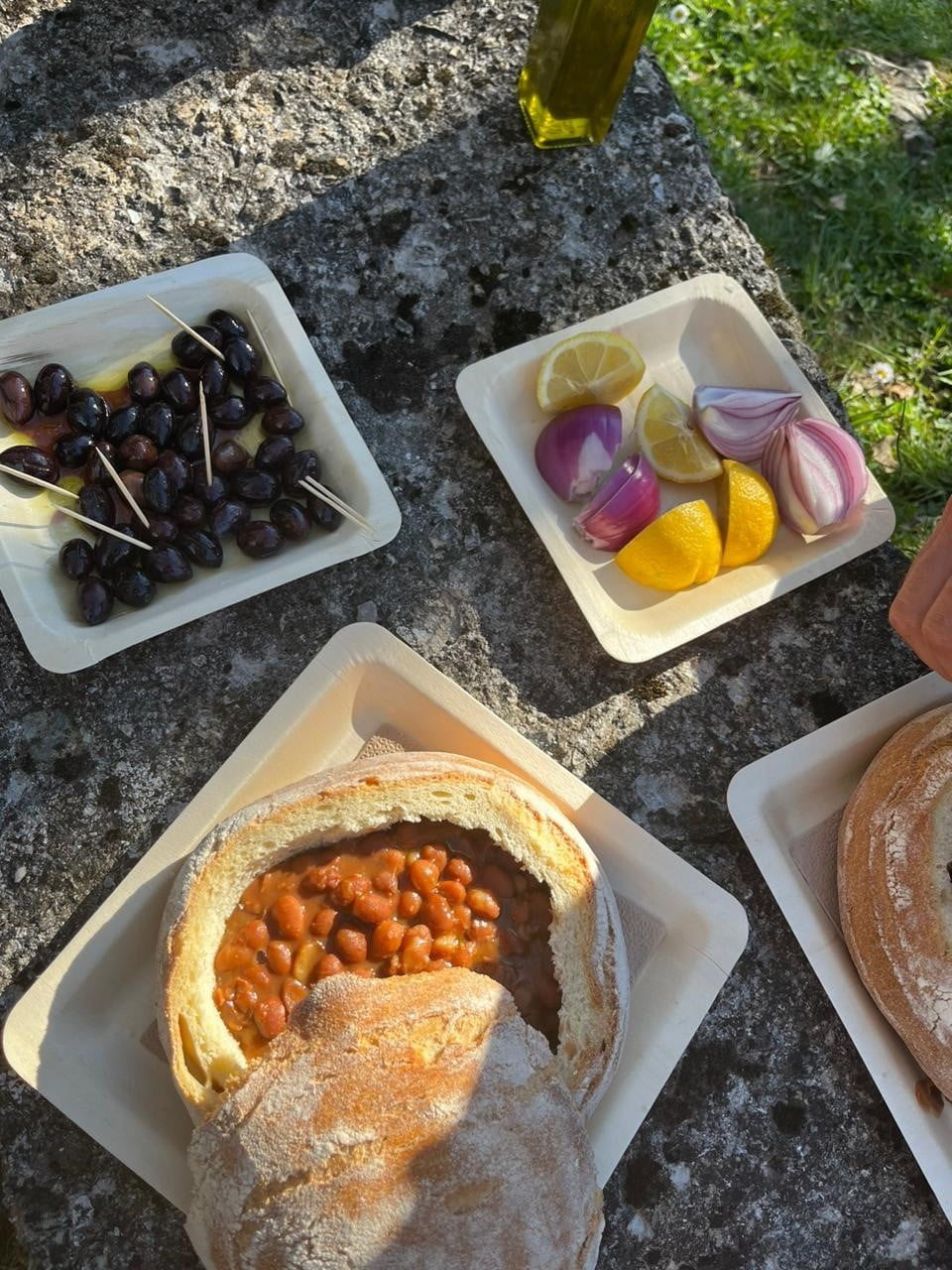
And then came the day of the main event… The day when the stories nostalgically shared by older locals about past decades were brought back to life – times when neighborhoods and families gathered to eat together in nature. In the historic olive grove by the sea, a grand picnic was set up, with the active women of the Rovies Cultural Association sharing their favorite local recipes with the attendees: chickpeas with manestra, cheese pies, anchovies marinated in vinegar and salt, loukoumades with honey and pollen, among others. Guests who came with their own baskets also offered something of their own.

Everyone pitched in, and together we made a salad with whatever vegetables and fruits were in season, dressed with honey, extra virgin olive oil, and pomegranate vinegar (Stagones), along with olives from the Rovies Agricultural Cooperative.

The festival took place with the presence of seven distinguished media outlets, following an invitation from the Municipality of Mantoudi-Limni-Agia Anna and the Rovies Trade Association.

Mesolonghi, a destination for unique experiential travel

Mesolonghi, a destination for unique experiential travel

Mesolonghi stands as a monument of history and culture, a symbol of Greece’s freedom.

It is a flat city, ideal for walking and cycling, situated among the largest continuous lagoon in Greece. It combines mountain and sea activities at very close distances and with varying degrees of difficulty.

It has distinctive gastronomic traits, is suitable for family getaways, and lies close to major cities with easy access.

The heroic exodus of besieged civilians and fighters in April 1826, a milestone in global military history, led to the city being declared sacred by decree in 1937.

The Mesolonghi lagoon is one of the largest wetlands in the Mediterranean. Formed over the last 10,000 years, it extends from the slopes of Varasova to the Ambracian Gulf, along a 50 km coastal front. It is among Greece’s most important wetlands and is protected by the Ramsar Convention. Over 200 bird species find refuge here.

Starting from SOCRATES ORGANIC VILLAGE WILD OLIVE (http://socratesorganicvillage.gr/el-GR/), our journey in Mesolonghi began.

SOCRATES ORGANIC VILLAGE WILD OLIVE is an organic olive farm in the Agrilia area of Mesolonghi, just 3 km from the historic city, perched on a hillside surrounded by the lush slopes of Arakynthos, with a wonderful panoramic view of the surrounding hills and the unique Mesolonghi Lagoon, offering an escape from urban chaos into a serene natural environment.

Discussion with the MESOLLONGHI BY LOCALS team and presentation of the activity “Carving the Fisherman’s Life.”

The experiences designed and implemented by Messolonghi by Locals were developed through participatory processes and direct collaboration with local professionals, entities, and businesses, aimed at the sustainable development of the region and the promotion of its intangible and tangible cultural heritage. More at https://messolonghibylocals.com/ti-kanoume/

Visit to the Garden of Heroes

The tour was conducted by certified guide Georgios Apostolakos.

The Garden of Heroes lies at the entrance of the northern side of the city. It covers almost fourteen acres where fighters of the garrison of the Holy City of Mesolonghi fought and were buried during the War of Independence.

At the center stands the monument of Markos Botsaris, a copy by Georgios Bonakos from the French sculptor David d’Angers, and the statue of the British philhellene Lord Byron, created by Georgios Vitalis.

Today, about 70 monuments of Greeks and Philhellenes, as well as crosses, busts, and statues of those fallen for the independence of Mesolonghi, are found in the Garden of Heroes. Its monuments are of great historical and artistic significance.

Lunch at the “Toulida” Fish Tavern, https://tourlis.gr

In the heart of Greece’s largest lagoon lies the Toulida Fish Tavern. A unique culinary experience where we enjoyed seafood of exceptional quality in an atmosphere of peace and harmony.

Visit to Kleisova’s Divari

The Kleisova lagoon forms the southeastern edge of the greater Mesolonghi-Aetoliko Lagoon ecosystem, covering an area of approximately 2,500 hectares.

Fishing in the “pelades” (traditional fishing nets) with the President of the Fishing Cooperative “Anagenissi,” Mr. Aristidis Mantzouratos.

The small fishing cooperative “Anagenissi” has achieved an important milestone: securing the Protected Designation of Origin for the Mesolonghi bottarga.

Boat ride in Kleisova. A traditional “gaita” boat trip and environmental tour

The tour of Kleisova lagoon is a unique experience. Guided by geologist-environmentalist and Messolonghi by Locals collaborator Ms. Sisia Roussi, we explored the lagoon’s rare ecosystem. Boarding the keel-less boat that comes from ancient times, we traveled among the Dalmatian pelicans, learned about the history, and experienced the magic of the city born from water.

Filleting and curing demonstration


Followed by a traditional fishing dinner beside the net accompanied by the unique local ouzo TRIKENE.


At the port of Mesolonghi, the Kapourdelis family briefed us about their fishing tourism activity aboard their boat, a unique experiential offering.

The family’s fishing boat “LAMBRINI” is one of the few offering unforgettable experiences of fishing and cooking the catch on board.


Visit to Pleurona

Ancient Pleurona, with its impressive wall, was one of the largest Aetolian cities. Nearby and adjacent to the wall lies the small theater, originally used as a council chamber. The panoramic view over the lagoon, across the Peloponnesian coasts and the mouth of the Acheloos, is unique. The stage building’s connection to the wall and defensive tower—once used as actors’ dressing rooms—adds important architectural interest.

The ancient theater was recently restored and re-opened on August 31, 2023.

The realization of the project crowns the long and extensive works to enhance the archaeological site of Pleurona from 2002 to today, through successive co-funded European Programs (3rd CSF and NSRF), making the ancient city one of the most organized archaeological sites in Aetolia-Acarnania.

Visit to the Salt Museum and guided tour by Director Ms. Despina Kanelli

Our journey concluded with another gastronomic meal at “Alatiera


Municipality of Karystos: A Destination for 365 Days a Year

Municipality of Karystos: A Destination for 365 Days a Year

Starting from Marmari, a picturesque fishing village just a breath away from Attica, only an hour from the port of Rafina, the journey of the press team from 10 leading Greek media began.

Tour of the Dragonhouses, one of archaeology’s most intriguing mysteries.

Legend says that the Dragonhouses were built by the Dryopes, who arrived in the area after being driven out of Central Greece by Hercules. According to one of the most widely accepted scientific theories, they were sanctuaries of Zeus and Hera.

Ascent to Castello Rosso

Just outside Karystos, about 4 km away, stands Castello Rosso at the foot of Mount Ochi. Its name comes from the reddish schist in the area, used in its construction. It was built in 1205 by the Latins following their conquest of Euboea, at the site where Karystos’ ancient acropolis once stood. The castle is ideal for nature walks. From above, it overlooks the bay of Karystos, while rare plants grow and beautiful birds nest in its crumbling walls.

Visit to “Montofoli Estate”, old town of Karystos

Montofoli Estate is a significant landmark in southern Euboea’s Karystia. It sits between the harbor and the Venetian fortress “Castello Rosso” at the top of the hill with the same name. The estate enjoys panoramic views of the bay and offers a charming balance between the prosperity of its fertile land and its dominance over the valley. Romans, Franks, Venetians, and Ottoman rulers have all made their mark here throughout history, attesting to its timelessness and special energy.

Here, the grape varieties Assyrtiko, Athiri, Aidani, and Liatico are cultivated and traditionally made into the sweet sun-dried wine “Montofoli Estate.” The estate’s citrus fruits are used to make jams.

Tour of the Folk Museum of the Women’s Association of the Marmari Community

The Marmari Women’s Association was originally formed by 20 women and today counts 170 members.

In just two and a half years of operation, they have created a fascinating Folk Museum. Here, the women of the association welcome you with a shot of tsipouro or a sweet treat they have made themselves.

Association members guide you around the Museum, showing exhibits such as the clothing the shepherd wore to stay warm on Mount Ochi in winter, traditional tsarouhia shoes, and the clay plates once used while eating by the fireplace, at the “sofá.”

They will talk about the jobs residents did in the area 80 years ago, during the occupation years, to survive—tasks now obsolete due to the E.U.—about the yachts that used to come to Marmari from Petalioi, about the shifting sands that change shape with the weather, about the beach where the king used to swim, and much more.

All these memories, spanning about 100 years, have been gathered in the house of the Women’s Association – Folk Museum.

Introduction to the Archaeological Museum of Karystos

The museum displays exhibits from prehistoric times up to the Roman period. Finds from the Dragonhouses of Karystos and Styra, from ancient Geraistos (the silver Kastri), and mainly from Paleochora are on show.

Haunt of Deipnosofiston

In a magical setting at Megali Vrisi in Styra, southern Euboea, you’ll find a place for quality food, good company, conversation, and traditional music.

Food is a major part of life in the Municipality of Karystos

Flavors of the Land…

In the traditional mountain homesteads of Ochi, recipes for making fresh mizithra, anthotyro, spicy tuloumi cheese, and kefalograviera are handed down from generation to generation. The delicious meats of Karystia (lamb, kid, veal, goat, and sheep) from animals raised on the slopes of Ochi are full of wild herb aromas. Thyme honey, kisseri from heather flowers, the renowned rose honey—all are products of exceptional quality and high nutritional value.

And in the plains, the tradition of winemaking remains strong, with the dominant grape being savvatiano, but also with organic wine. Citrus, the famous purple onion, corn, mountain potatoes, tomatoes, and cherries, especially from Agios Dimitrios, are among the region’s choice products.

Olive presses with decades of tradition produce tons of pure olive oil, while during the olive harvest, fresh oil on warm bread and loukoumades mark the beginning of the new season with unique flavors. The region’s choice pasta is kourkoubinia, small pieces of dough twisted by hand on the rolling pin, boiled and fried in goat butter or oil.

And Flavors of the Sea…

In this area, seafood dishes are tastier than anywhere else. That’s because they are nourished by the “herb.” Indeed, the strong sea currents in the area of Cape Kafireas, a migration route for Mediterranean fish, oxygenate and enrich the sea waters with nutrients—the legendary “herb” of local tradition. Culinary trails are varied, rich, and unique, inviting you on an unforgettable gastronomic journey.

The initiative of the Municipality of Karystos to organize the familiarization trip for invited journalists from national media received a very positive response from participants and is part of a broader action plan to promote and develop tourism in Karystos.

The primary goal was that, through their brief stay, hosted journalists would connect with the natural wealth and beauty of the Municipality of Karystos, taste high-quality local products, and—above all—experience, from Marmari and Karystos to Styra, the area’s outstanding hospitality.

The Mayor of Karystos, Mr. Eleftherios Raviolos, stated:

“I am especially pleased that, for the second year running, the Municipality of Karystos successfully organized a press trip!

Through our hospitality, we aimed—within a short time—to share with the media the living traditions and flavors of our land.

Our Municipality, with its incredible natural beauty, excellent flavors, and hospitable people, can offer visitors a truly unique experience, and through such initiatives we strive to share that both at home and abroad.”

Central Evia, the all-seasons destination

Central Evia, the all-seasons destination

Starting from Chalkida, the capital of the Prefecture of Evia, and staying at the Palirroia Hotel, our journey began through the beautiful region of Central Evia.

First stop, the beach of Nea Artaki

Nea Artaki is a key destination, connecting those heading to Central Evia and those visiting Northern Evia. It is the second largest city in Evia by population. The main beach of Nea Artaki might not be particularly popular with locals for swimming, but it is a favorite for the dozens of shops nearby where one can enjoy coffee, food, or ouzo while gazing at an incredible view.

Visit to the Folklore Museum

The tour was given by the wonderfully hospitable President of the Association of All Artakians – Kyzikians, Ms. Smaro Psatheri Mimikou.

The first day ended with dinner on the beach of Artaki

Dinner in Nea Artaki was a revelation. Anyone who hasn’t tasted the local flavors deserves to visit Nea Artaki from July 14 to 16, during the 3rd three-day Gastronomic Festival of Asia Minor Flavors, organized by the Association of All Artakians – Kyzikians.

*Anchovy omelet

Next stop, Politika Evias

The Hero’s Trail

At the Hero’s Trail, we experienced something different and unique. After the hike, we visited the Monastery of Panagia Perivleptos of Politika, where we lit a candle and were treated.

Visit to the Holy Monastery of Panagia Perivleptos

In a pine-covered ravine in the settlement of Politika stands the katholikon of the Monastery of Panagia Perivleptos, one of the area’s most important monuments. It was built in the 11th century and reconstructed during the Ottoman era. Architecturally, it belongs to the cross-in-square domed type of church. The sculptures set into the facade and iconostasis are of special interest—works of an outstanding workshop, possibly the same that worked at the Monastery of Hosios Loukas in Boeotia and Agios Loukas in Evia. A portion of the original marble floor remains, with a pentacyclical motif, known as the “pentaomphalon,” at its center. Frescoes survive inside. An inscription from 1668 in the sanctuary names those who may have painted or contributed to the work. During the Frankish occupation, it became a Latin monastery, staffed by Benedictine monks. In 1582, Metropolitan Laurentius of Evripos purchased the compound and attached it as a dependency to the Monastery of Agios Nikolaos Galataki. The monastery’s history in this period is characterized by disputes over its rich estates. Today, it remains alive thanks to a women’s monastic community. In 2014, restoration of the katholikon, damaged by the 2003 earthquake, as well as fresco conservation, was completed.

Coffee and spoon sweet in the village square of Politika

Politika Tower

In the heart of Politika, beside the Church of the Transfiguration, stands the medieval tower, once the seat of the region’s feudal lord and an economic hub. This massive defensive building is typical of the Frankish occupation period. The square tower has four floors; the main living quarters are on the third, with large windows, a fireplace, and latrine. The main entrance, once reached by an external retractable wooden staircase, is on the second floor; the present ground level entrance was added in 1973. The tower is visitable today after a restoration (2011–2014, ESPA funding). Inside are photographic exhibitions of the restoration work and of life in the era of Frankish rule.

Visit and meal in the village of Nerotrivia

The community of Nerotrivia, 26 km west of Psachna, is famous for its excellent olive oil, produced in large quantities. Abundant running waters form rivers and streams in a lush landscape. After the Kapodistrias plan, it became part of the Municipality of Messapia, and according to the latest census its population was 540.

Tour of the Chalkida War Museum

The War Museum of Chalkida is housed in a landmark building of the historic Infantry School and showcases the military history of Greeks. Its exhibition spaces contain unique and rare artifacts from the Venetian period and the Revolution of 1821 up to modern times—collections of weapons, uniforms, archival and photographic materials, paintings, works of art, and dioramas of important historical events. It is a dynamic space of “living history,” paying tribute to our warrior ancestors and respecting their sacrifices.

The Museum houses the ANASTASIOS LIASKOS COLLECTION.

Nea Lampsakos and Bourtsi

Nea Lampsakos is a town with significant commercial activity, founded by refugees from Asia Minor’s Lampsakos (Dardanelles area). Its beach is famous for ouzeri and seafood eateries with a wide variety of seafood. Near Nea Lampsakos Beach is Bourtsi, a settlement with fish taverns. Nea Lampsakos has 1,944 inhabitants and is 7 km southeast of Chalkida.

Visit to “Lakhouvaris Mushrooms,” Kathenoi, Evia

“DIRFYS MUSHROOMS” belongs to two agronomists from the Agricultural University of Athens, Lefteris Lakhouvaris and Thanasis Mastrogiannis, who have specialized in mycology and have been professionally active in the mushroom sector since 1995. Activities began in March 2004, with the establishment of a substrate production unit and the creation of the first satellite mushroom cultivation system in Greece, while in 2006 they entered into the production of Pleurotus and Shiitake mushrooms.

Mushroom tour and tasting

The journey concluded with a meal in the village of Steni

The cuisine of Evia is rich and interesting.

Steni Evias is a place renowned for its good food and every weekend is filled with thousands of visitors.

Kynouria Establishes a Strong Brand Name

Kynouria Establishes a Strong Brand Name

Fam Trip of the Arcadia Chamber of Commerce under the auspices of the Municipalities of North and South Kynouria.

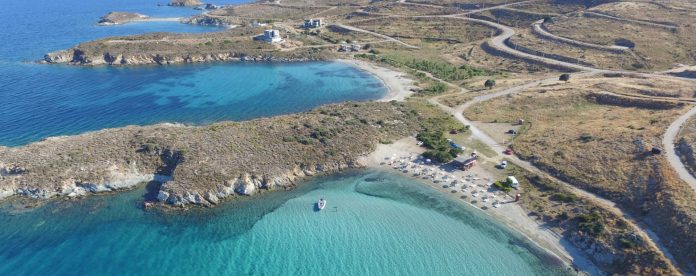
Starting from Tyros Beach, a beautiful settlement refreshed by the sea breeze of the Myrtoan, our journey began through unique Kynouria.

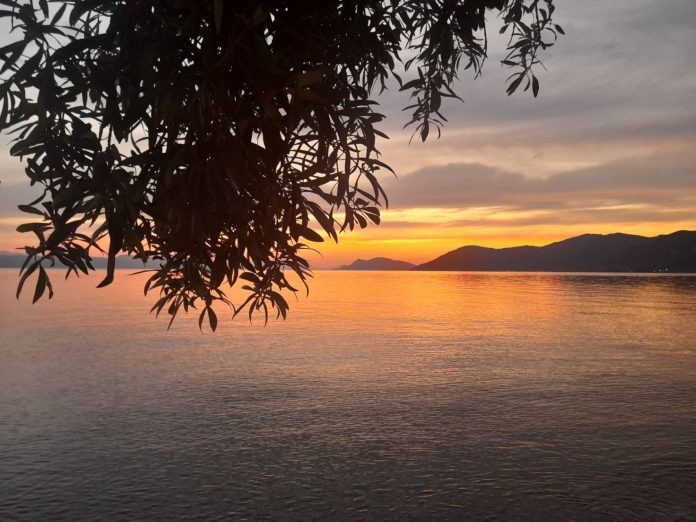
*Sunrise at Tyros Beach

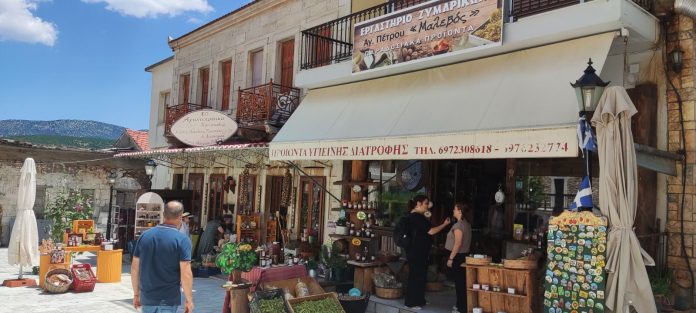
Visit to Agios Petros, a mountain capital of North Kynouria, immersed in greenery.

With the first stop at Agios Petros, which boasts excellent tourist infrastructure—hotels, taverns, shops with local products—we discovered that it is a perfect destination for every season of the year, catering to all preferences.
Key attractions we visited included the Trikalitis Tower, the Church of the Apostles Peter and Paul at the square, the renovated stone school (an excellent architectural example of its time), Aga’s Tower dating to the 18th century, the old carpet factory, and beautiful shops selling local goods.

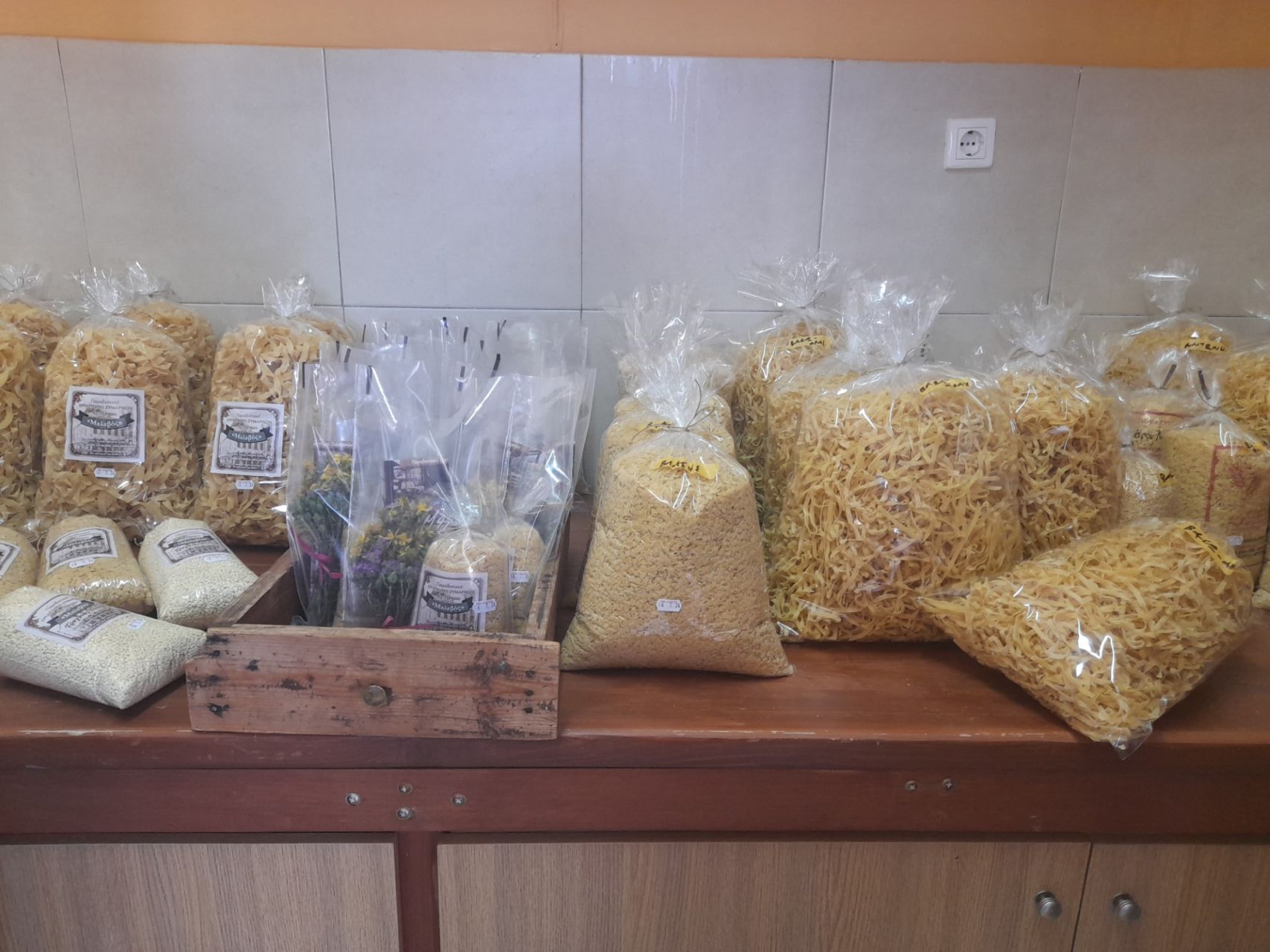
At the same time, we had the chance to observe the making of handmade pasta at the traditional “MALEVOS” workshop.

*Traditional pasta “Malevos”


Passing through the village of Agios Ioannis, we reached the village of Platanos.

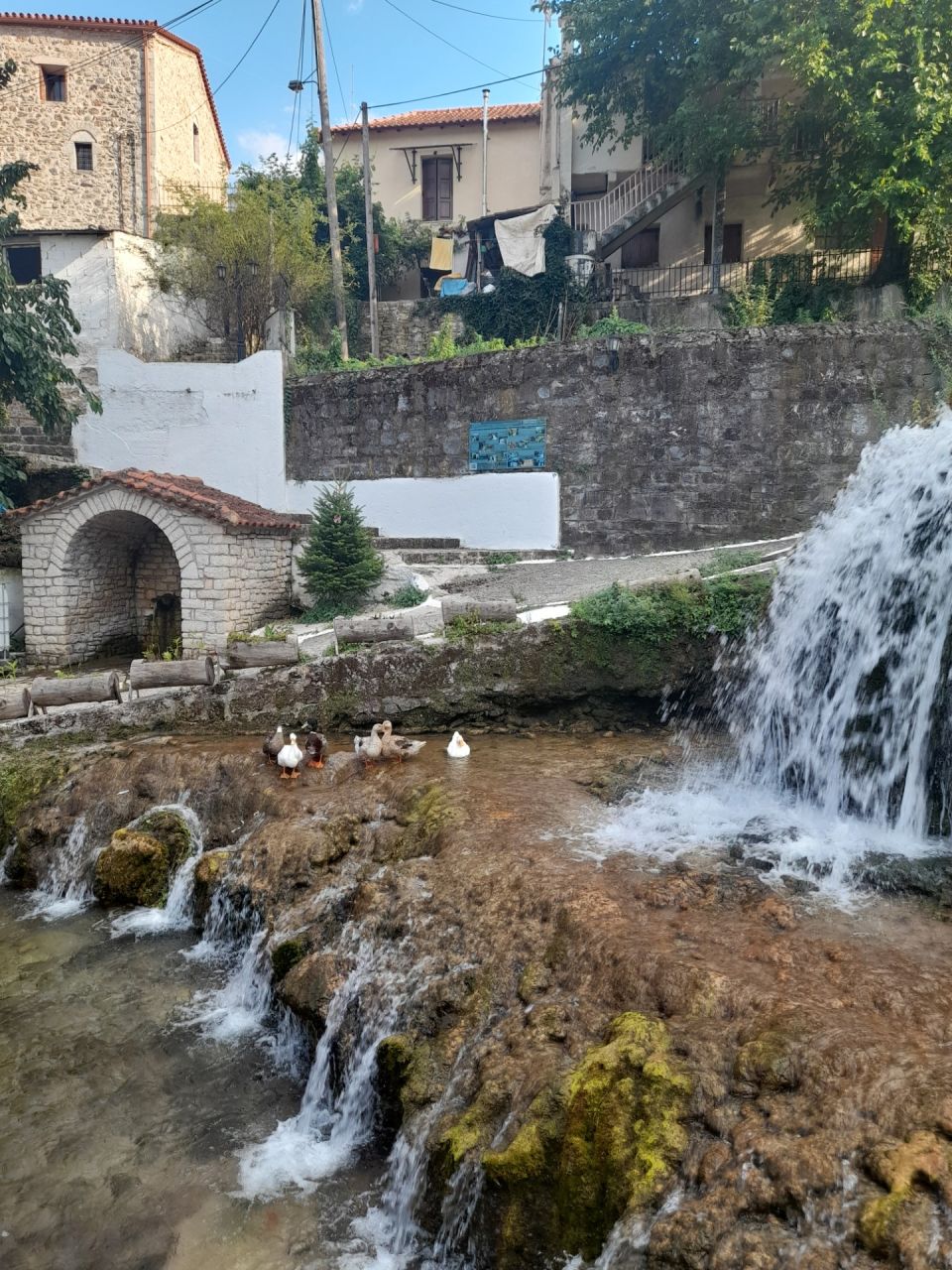
Platanos is a picturesque, small village on the southeastern side of Mount Parnon, 450 m from the sea and 180 km from Athens. The village is traditional and truly famous for its water. We visited the old watermill and the stone fountain. The region also nurtures the Cave of the Saviour and the Lepida Gorge.

Visit to the Tyros Cultural Center

At the Tyros Cultural Center, a presentation of the South Kynouria destination was delivered by the Mayor of South Kynouria, Mr. Charalampos Lysikatos, Deputy Mayor of Finance Mr. Michalis Sotiropoulos, Deputy Mayor of Tyros Mr. Kostas Manousos, President of the Tourism Department of the Arcadia Chamber Mr. Yiannis Sambrakos, President of DIKENK Mr. Christoforos Douzenis, Representative of the Tyros Trade Association Mr. Nikitas Englezos, founder of the social cooperative “A Chora Namou” Mr. Dimitris Lalousakis, and Eleni Manou.

Discovering the local cuisine of Kynouria

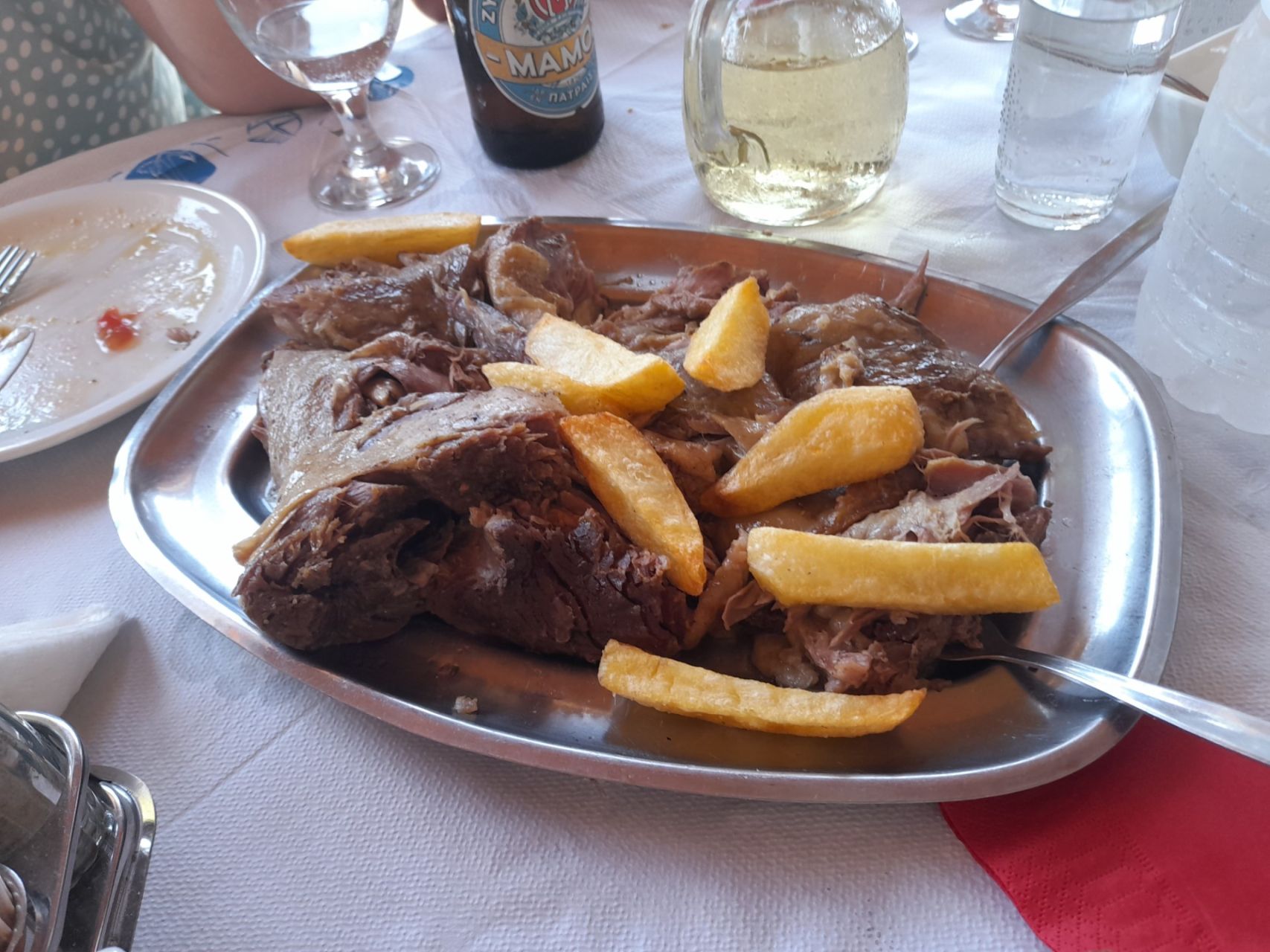
The meal at Zaritsa, the traditional “Tasos” tavern, was a gastronomic journey into the local cuisine with traditional and authentic flavors that thrilled our senses.

Visit to Leonidio and the “Melitzazz” Festival

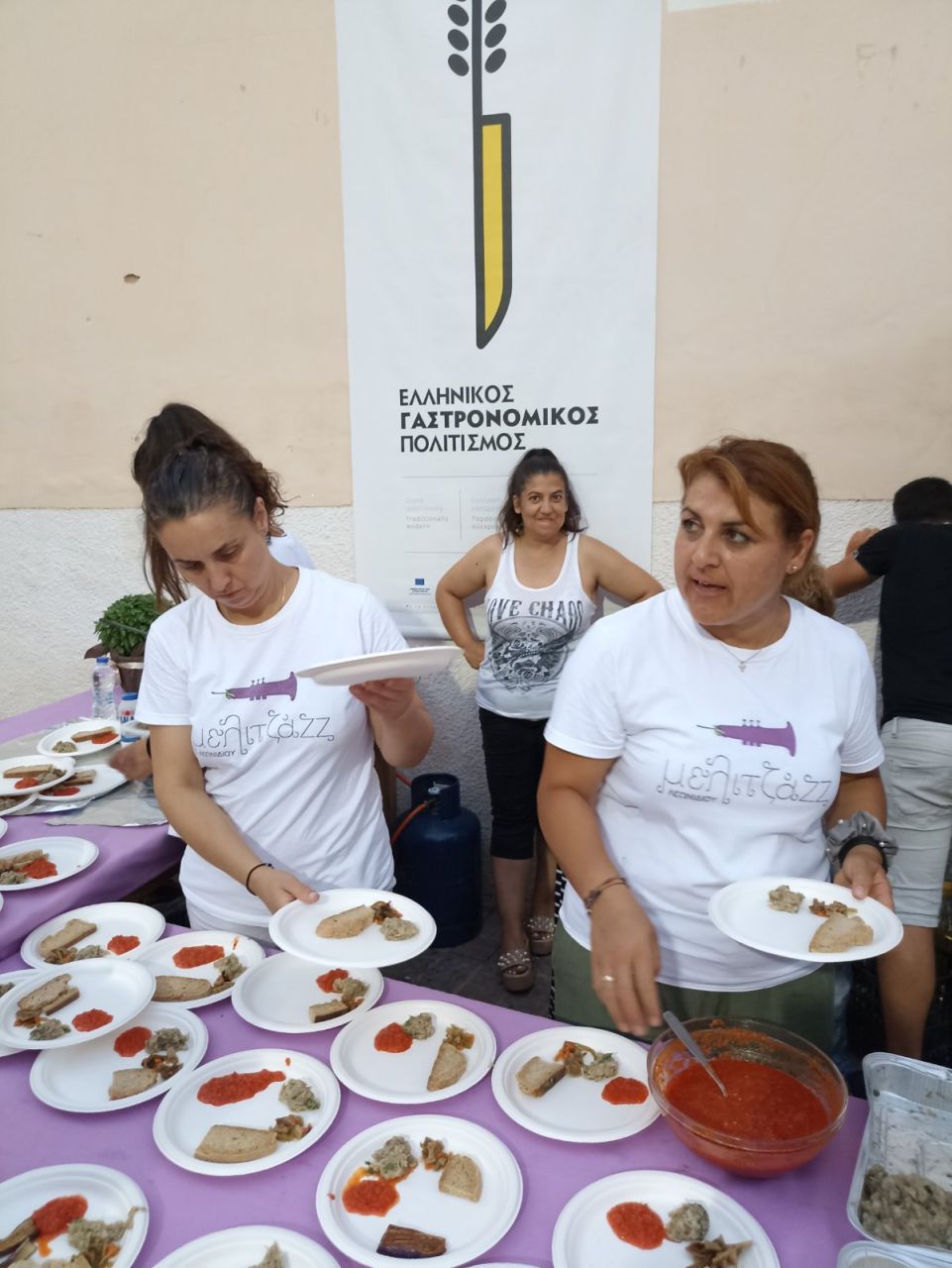
Leonidio is a historic place and a traditional settlement within the protected Natura 2000 area. It is home to the recognized PDO product “Tsakonian eggplant of Leonidio,” and its residents still speak the endangered Tsakonian language.

In Leonidio, three of the most magnificent pre-revolutionary monuments of the Peloponnese still survive: the Trikaliotis Tower (1808) and the Polytimos Mansion (1816), both listed buildings. The third important structure is the Katsikogiannis Mansion (1807), located to the north of the settlement (Skaliotis Tower).

In Leonidio, we had the opportunity to discover and experience up close the unique Tsakonia festival “Melitzazz,” now in its ninth year.

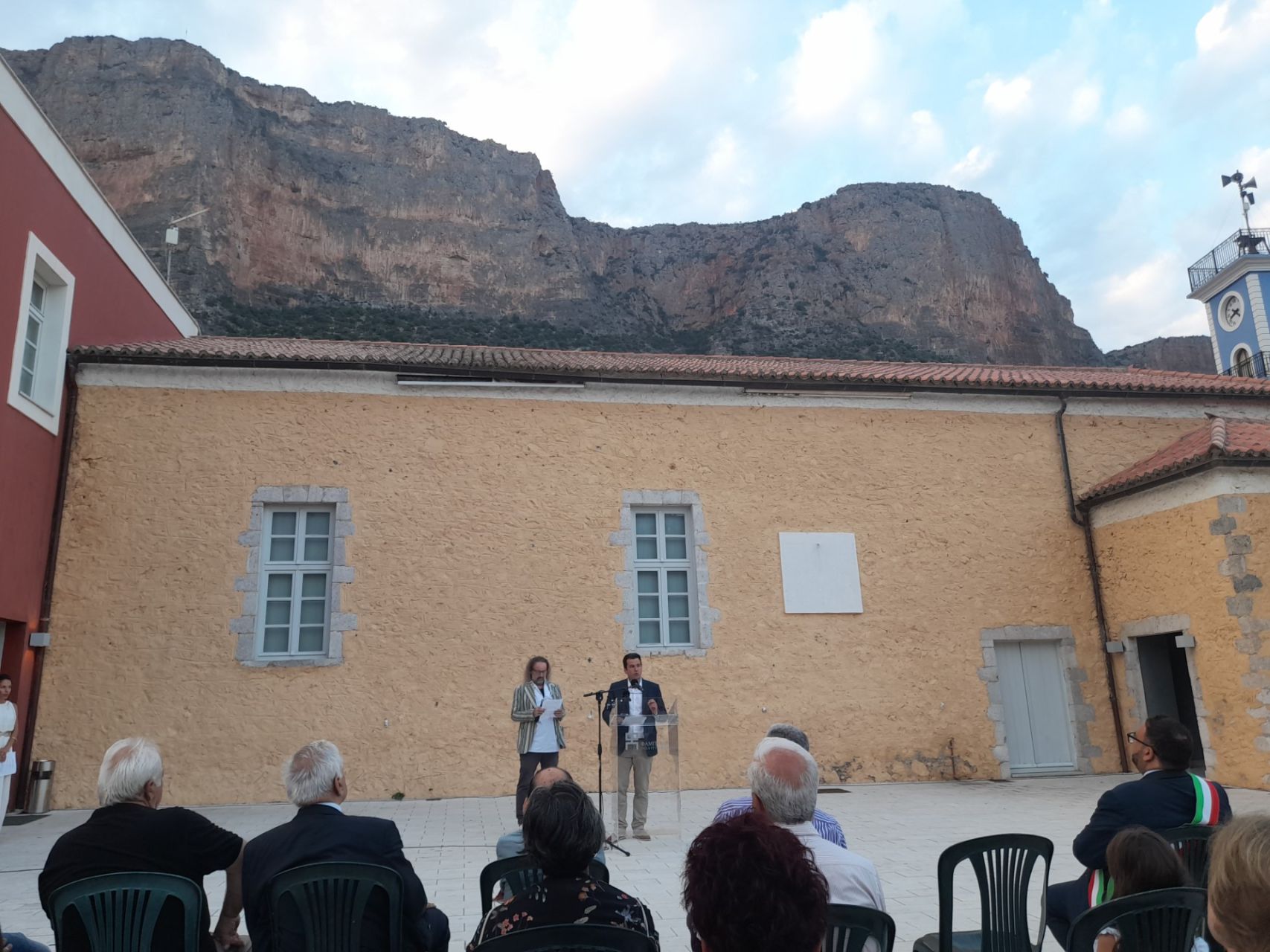
As part of “Melitzazz,” a twinning event took place at the “Fabrica Politismou” venue between the Municipality of South Kynouria and the Italian town of Martano. The event included the unveiling of a sculpture gifted by Martano to South Kynouria and the naming ceremony for Piazza Martano.

Next, at Merikaki Square, the progressive duo Kadinelia offered a musical journey where the timeless sounds of Greece transformed into something new, through the captivating melodies of acoustic guitar and their harmonious vocals.

Their music identity is the enrichment of Greek traditional music with elements of blues and rock, in a unique multicultural soundscape where East meets West.

This was followed by a DJ set on Leonidio’s main road with rhythmic and dance tunes from DJ Christos Arestis, which turned the central street into a large open-air bar.


Visit to Paralio Astros and city tour by Giorgos Karagiannis, member of social cooperative “5ENTE”

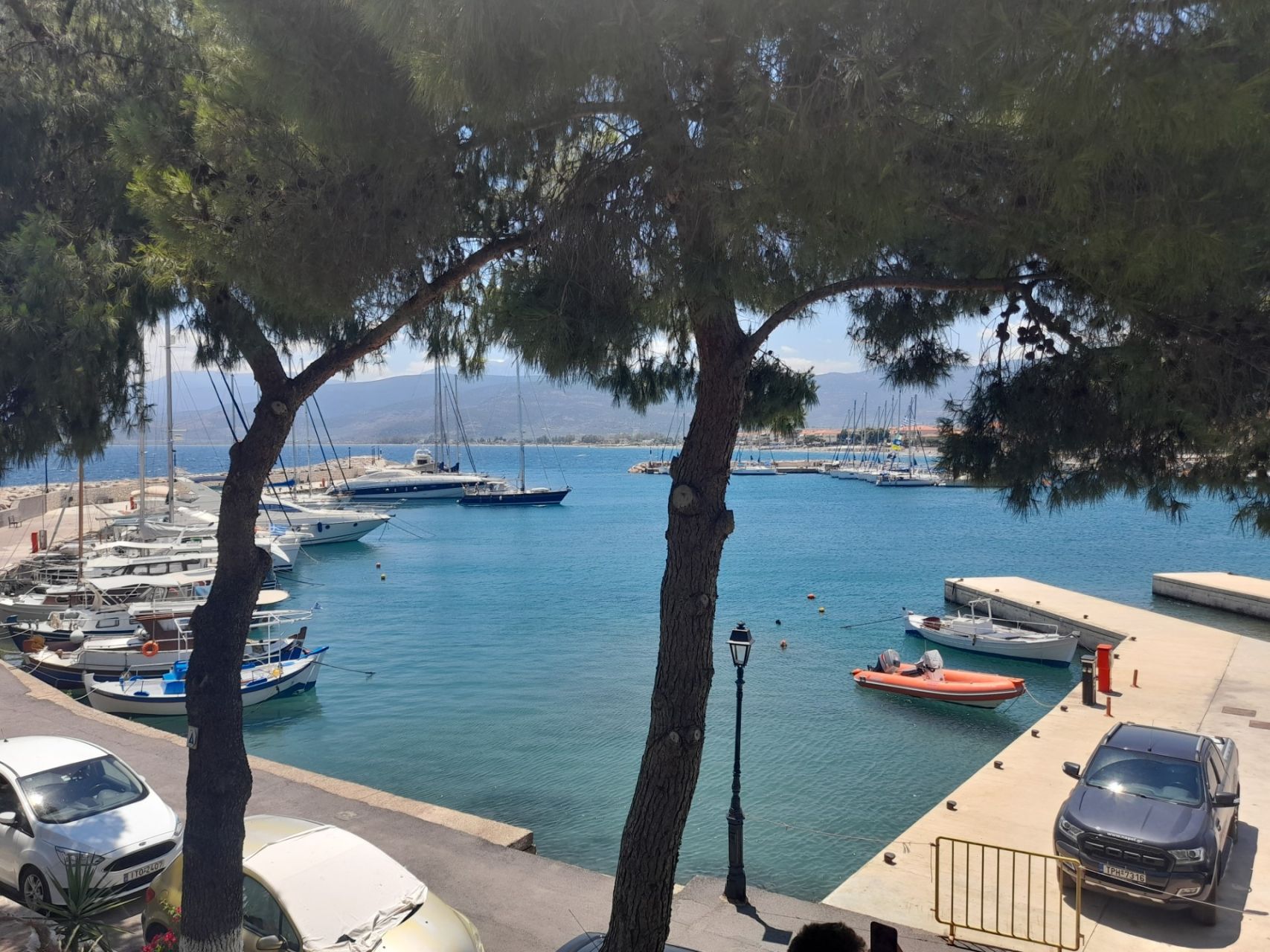
Paralio Astros is one of the best-known summer resorts of the Peloponnese, with developed tourist facilities for every preference, kilometers of pristine beaches, and possibilities for sea activities.

It stands out for its picturesque natural harbor and the area nicknamed “Nisi” by locals, offering amazing views of the Argolic Gulf.

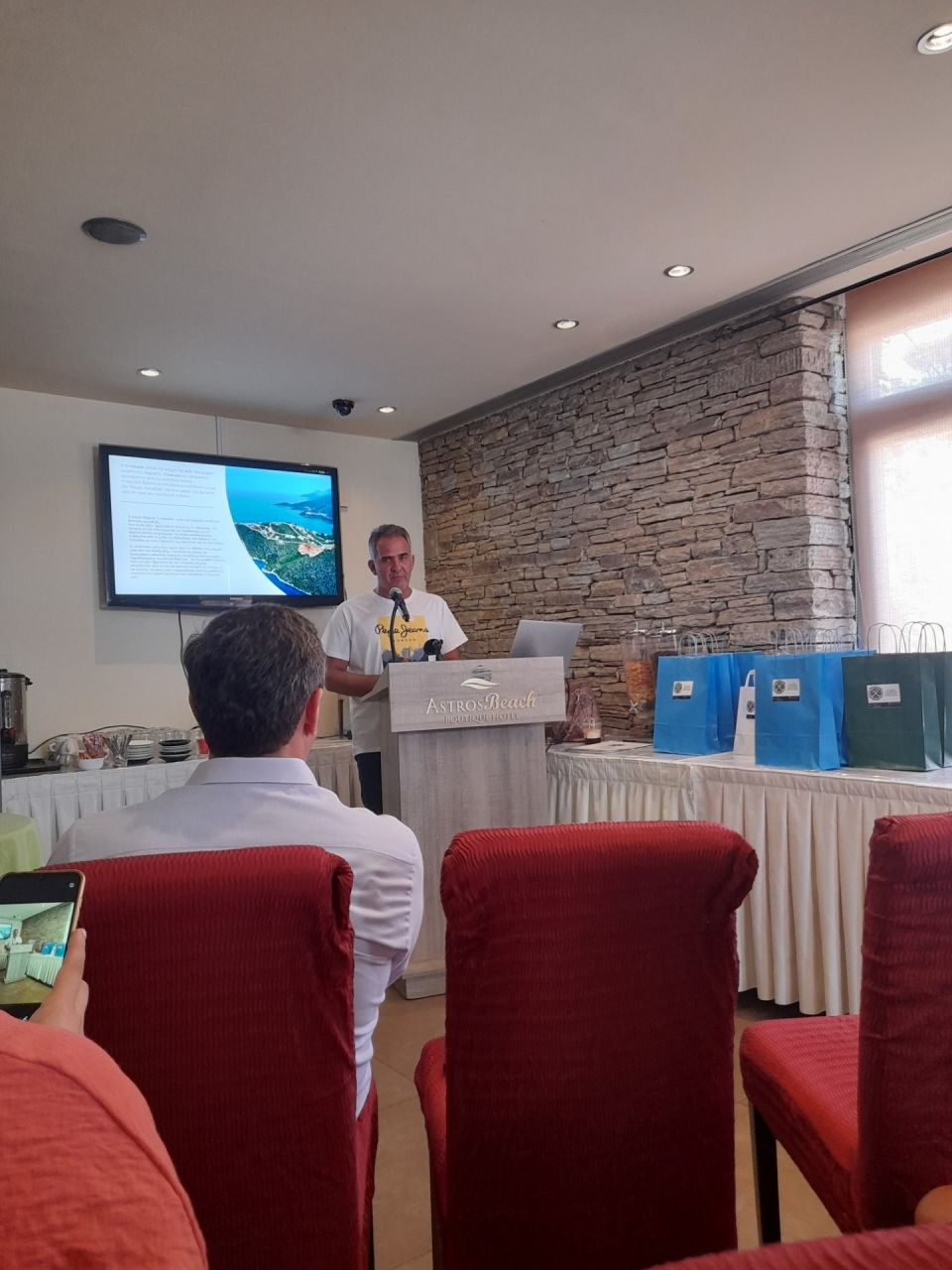
Notably, during our visit to Paralio Astros, there was a presentation of the North Kynouria destination at the “Astros Beach” hotel.

The presentation was given by the President of the Arcadia Chamber of Commerce, Mr. Yiannis Troupis, the Mayor of North Kynouria, Mr. Giorgos Kampylis, the President of the Eastern Arcadia Accommodation Association Ms. Vivian Manolesou, and other local officials.

Final stop at Xiropigado

Xiropigado beach is a place of tranquility, with pebble beach and crystal-clear waters, and the area features a developed tourist infrastructure, including hotels.

Referring to the familiarization trip promoting Arcadia as a destination, President of the Arcadia Chamber Yiannis Troupis stated:

“In this Fam Trip, we confirmed once again the excellent cooperation between the Arcadia Chamber and the Municipalities of North and South Kynouria. We are fully aligned with our municipalities on the view that joint actions to promote Kynouria’s tourism products create growth and social benefit for all of Arcadia. We are doing a lot and will do even more. Our vision is for Arcadia to become a world-class tourism brand name.”


Thessaloniki Opens Up to the Athens Tourism Market

Thessaloniki Opens Up to the Athens Tourism Market

The Thessaloniki Tourism Organization strengthened the city’s presence among the Athens public, presenting it as a top winter city break destination during an event held yesterday at a central hotel in the capital.

In her welcoming address, the Deputy Regional Governor of the Metropolitan Unit of Thessaloniki and President of the Thessaloniki Tourism Organization, Ms. Voula Patoulidou, highlighted Thessaloniki’s advantages. According to the latest INSETE bulletin, tourists place Thessaloniki first in the food and drink category with a rate of 92%, surpassing major gastronomic destinations.

Ms. Patoulidou then referred to the city’s strengths, including its 15 UNESCO monuments, the unique location of its port, and its proximity to popular travel hotspots such as Halkidiki, Mount Athos, Olympus, various ski centers, and areas of stunning natural beauty.

She also highlighted Thessaloniki’s inclusion in the UNESCO Creative Cities Network for Gastronomy, an important development that enhances the city’s tourism identity and establishes it as a significant destination for both gastronomic and cultural experiences.

She stressed that Thessaloniki’s greatest asset is the temperament of its people, making it a vibrant city that never sleeps, especially during the festive season when its streets come alive with people dancing and singing until dawn.

It is noteworthy that the event, organized in cooperation with Tourism Plus, was attended by the full administrative board of the Thessaloniki Tourism Organization: Deputy Mayor for Tourism and Vice President of the Organization, Ms. Maria Karagianni; Vice President of the Professional Chamber and Treasurer of the Organization, Ms. Chryssa Granouzi; Chief Commercial Officer of Thessaloniki Port Authority, Ms. Theodora Riga; and representative of the Chamber of Commerce and Industry, Mr. Haris Alexopoulos.

Immediately after the corporate presentation of Thessaloniki, Ms. Andreadou from the Tourism Directorate of the Region of Central Macedonia spoke about initiatives covering all areas of Central Macedonia.

Promising prospects were confirmed for boosting tourism flows to Thessaloniki throughout the year, thanks to the potential for increased flights from new destinations to Macedonia Airport.


Western Greece, the land of beauty and the senses | A journey through Achaia and Mountainous Nafpaktia

Western Greece, the land of beauty and the senses | A journey through Achaia and Mountainous Nafpaktia

Starting from Patras, a unique city break destination that, in addition to its historical charm, offers dozens of beaches, you have the chance to visit stunning regions and unique landscapes.

Accommodation at Moxy Patra Marina Hotel

The brand-new Moxy Patra Marina is less than a 15-minute walk from the center of Patras and combines a smart, fast-paced tech environment with a modern lifestyle. This vibrant hotel in Patras embodies the effervescent and exciting lifestyle for which Patras is known. While at the hotel, you can keep up with your daily workout at the gym or swim in the outdoor pool. Work is also easy to accomplish thanks to the hotel’s ultra-fast WiFi services.

A refreshing cocktail in the hotel’s roof garden with its unique view is an experience in itself.

The hotel is located near the port, with views of the marina and breathtaking sunsets.

The journey continued to the historic Kalavryta with a visit to the Memorial of the Executed (Place of Sacrifice), in memory of the 1943 holocaust during WWII.

Stop at the Municipal Museum of the Kalavryta Holocaust

In this symbolic building, the residents of Kalavryta experienced and suffered the brutality of Nazi atrocities: it was where they were deceitfully assembled, subjected to the inhuman separation of families, painful partings, harrowing incarceration of women and children, and their violent release.

Hiking excursion on Mount Chelmos, Waters of Styx – Zarouchla. Where man becomes one with nature.

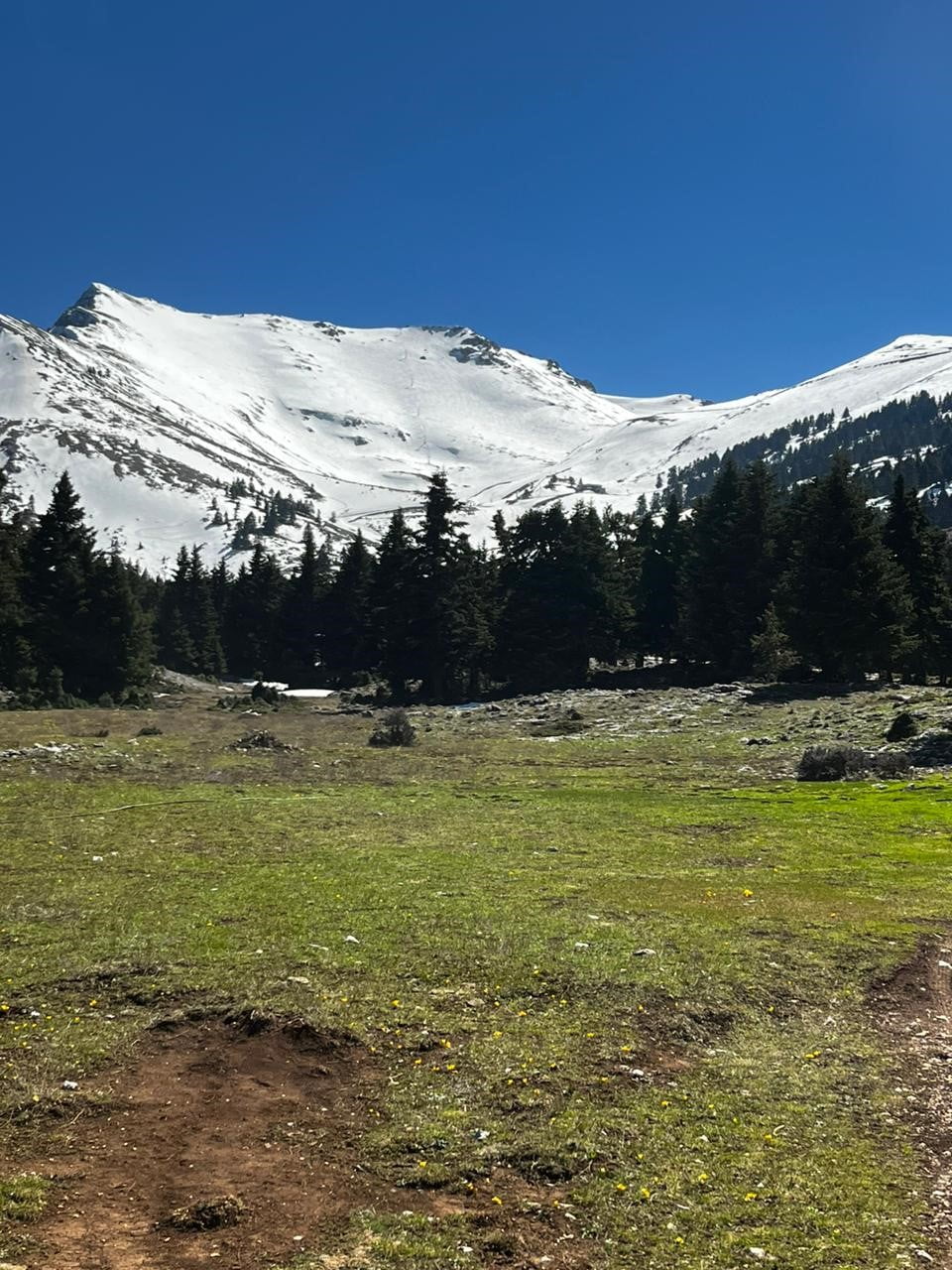
Our journey in Achaia continued with hiking through the valley of Styx, a magnificent landscape under the imposing mass of Mount Chelmos, where you discover the beautiful fir forest.

During the activity, we cooked and ate inside the forest (Holy Monastery of the Holy Trinity), under the sounds of the Krathi river.

Our tour of Western Greece continued in one of the most beautiful villages of Mountainous Nafpaktia, Ano Chora.
A village with only 5 permanent residents left. For this part of the tour, our guide was the most active of the permanent residents, Mr. Dimitris Tsatsanis, Vice President of the Cultural Association.

As he told us, the village of Ano Chora fills with people during the various events held there, such as the recent celebration of Tsigarithra.

During the visit, we had the chance to see the Folklore Museum, which in better times used to be the village elementary school, and one of the teachers who served there was Kosmas of Aetolia.

Our tour continued with a visit to the historic bus “Karnavalos.”

The bus became famous for its route and its… roaring engine. It was, after all, the first urban bus that connected the line from Nafpaktos to Ano Chora. Stories from old Greece that remain alive…

The gastronomic revelation was the restaurant “Elatou” on the slope of Mount Kerasovouni or Omalia with views towards the Vardousia mountains.

We enjoyed home-cooked dishes, handmade pies, and desserts by Mrs. Eleni.
The stuffed cabbage rolls smelled of fresh eggs from free-range hens and the rooster cooked in wine, for those who know, recalls another era of pure and authentic flavors.

The Regional Governor of Western Greece, referring to the unique beauties of the region, stated:

“Western Greece is the land that tells the story of Hellenism for 3,000 years. From Ancient Olympia and the olive wreaths of Olympic ideals to Nafpaktos of the historic naval battle and Kalavryta of the national uprising, every place in Western Greece tells a great story.

Western Greece is the land of beauty and the senses. From the magical beaches of Ilia and the waterfalls of Neda to the gorge of Vouraikos and the lively, youthful Patras, and from the unique villages of mountainous Nafpaktia to Lake Kremasta, visitors can enjoy rare local flavors, find themselves in enchanting landscapes, encounter places where tradition is intertwined with contemporary reality.

Above all, however, Western Greece is the land of its people. Beautiful, simple, approachable. People for whom the visitor is not a “customer” but a guest.”

People full of the joy of life who turn the Patras Carnival into a creative celebration and the Olympic Flame lighting ceremony into a global festival.

This is Western Greece. An “epic experience” for every visitor!”


The Edipsos Carnival attracts over 1,000 revelers and thousands of visitors

Corinthia: An enticing destination with a unique history for quality holidays

The Carnival of the Municipality of Istiaia-Edipsos took place in truly impressive style on Sunday, February 25, featuring the participation of 1,000 revelers and thousands of attendees who celebrated enthusiastically, creating an unforgettable festive atmosphere.

The municipality, in collaboration with the “Romantic Volunteers,” organized a unique carnival event inspired by current events, with numerous different parallel happenings running from February 25 through February 26, leaving the best impressions and drawing all eyes to Edipsos.

The spa town was overflowing with people who had arrived from all regions of Greece to celebrate with the dazzling revelers. On Saturday, February 25, both at the Edipsos Spa and in Istiaia’s square, a host of dance performances captivated the crowds, featuring every local dance group.

The grand parade unfolded on Sunday, February 26, along the Edipsos Spa beachfront, where 15 floats, stilt-jumping jugglers, marionettes, and more than 1,000 carnival participants signaled the start of the party. This exuberant celebration—taking place for the first time since 2019—was crowned by the spectacular burning of the carnival effigy at the Edipsos harbor, where thousands of fireworks lit up the whole area.

Clean Monday was also celebrated across the municipality, emphasizing tradition. Locals and visitors who had arrived for the holiday weekend cooked and enjoyed local Lenten delicacies, thoroughly honoring this cherished custom against the backdrop of North Evia’s natural beauty.

Among those present at the carnival was the Mayor of Istiaia–Edipsos, Giannis Kotzias, with his team, who congratulated everyone involved in making this remarkable event a success.

Mayor Kotzias noted that “the largest carnival in North Evia is once again being hosted here after many years, sweeping up everyone in a wild and fun-filled atmosphere.” He added, “We are especially pleased, as accommodation occupancy is extremely high, and let’s not forget that this destination offers all-season hospitality—every time of year brings a different, immersive experience for visitors.”

Municipality of Istiaia – Edipsos: From the spa town to the mountain peaks

Corinthia: An enticing destination with a unique history for quality holidays

By Katerina Karsioti

Northern Evia at its best and most festive. One of the most impressive and celebratory events took place in the Municipality of Istiaia – Edipsos, where more than 5,000 people had the chance to experience the lighting of the Christmas tree up close.

The tree came from the Carpathians in Romania, offered as a gift by Mr. Dragos Gabriel Zisopol, President of the Greek Community of Romania, symbolically strengthening the long-standing friendship between the two regions.

It is worth noting that Istiaia is twinned with Volondar in Romania, which is why among those present were Romanian firefighters who had helped during the deadly wildfires, Romanian volunteers who cooked and offered local delicacies to the crowd, and children brought to the area especially for the Christmas tree lighting ceremony.

In a destination within arm’s reach of Athens, visitors come into direct contact with a place full of hidden gems that fascinate, authentic villages where enduring traditions impress, cultural landmarks of unique significance, and a truly captivating culinary culture.

Despite suffering great destruction, Evia stands strong, continues to dream, and offers warm hospitality while guiding visitors on a “travel experience” marked by complexity and, above all, beauty.

Because it’s worth shining a light on your land’s story and contributing to its regeneration. Between mountain and sea, the journey through Istiaia – Edipsos unfolded in a thematic way, with each new experience following another, setting trends and offering inspiration.

Discovering the Municipality of Istiaia-Edipsos in Three Days

A visit to Istiaia – Edipsos for the tree lighting included a multitude of activities and tours closely tied to local customs.

The first stop, made before the journey began, was at the center of the region, where excellent accommodation infrastructure exists, such as the hotel “LITO,” offering high-quality services and stunning views.

A meal at the traditional restaurant “Kalyves – Mouries”

The area’s culinary narrative is long and authentic. At “Kalyves,” a stone-built gastronomic home with a tradition in local meats and recipes, memories are sure to be triggered and the flavors reach new heights.

Spa at Greece’s legendary and therapeutic spa town

A visit to Edipsos means SPA. At the hydrotherapy center “9 QUEENS,” run by owner Mr. Giorgos Skourtaniotis and now in its fourth generation, the experience offers something truly unique and relaxing. Edipsos is Greece’s most popular spa town and historic hub for hydrotherapy.

Religious tourism finds its “place”

Istiaia – Edipsos is filled with amazing churches and monasteries. No complete journey would be without a visit to Saint George Monastery, which has a lengthy history. Official records date its founding to 1670, although local tradition claims monastic life began in the 13th century.

High-adrenaline mountain tour with 4×4

The region boasts mountain spots of unique natural beauty, perfect for a variety of themed activities. A 4×4 drive set out from Edipsos toward Mount Telethrio, a unique stop for explorers, and included visits to mountain villages along an ancient oak forest road, ending at the summit of Prophet Elias and the village of Simia.

Mountain visits for pure taste

After an off-road journey, gastronomy takes center stage, offering visitors authentic culinary delights. Tavern “Kokkinomilies” serves signature local recipes with genuine flavor. It honors the rich agri-food bounty of the municipality, with dishes made exclusively from local ingredients. “Zacharakis” in the village of Agios is another local hallmark, with a long tradition in high-quality meat and distinctly Greek traditional cuisine.

Beyond the delicious treats at “Kokkinomilies,” no table is complete without traditional tsipouro. This beloved spirit starred during a visit to a local distillery headed for the mountain villages Kryoneritis and Milies.

Local products “set the most local table”

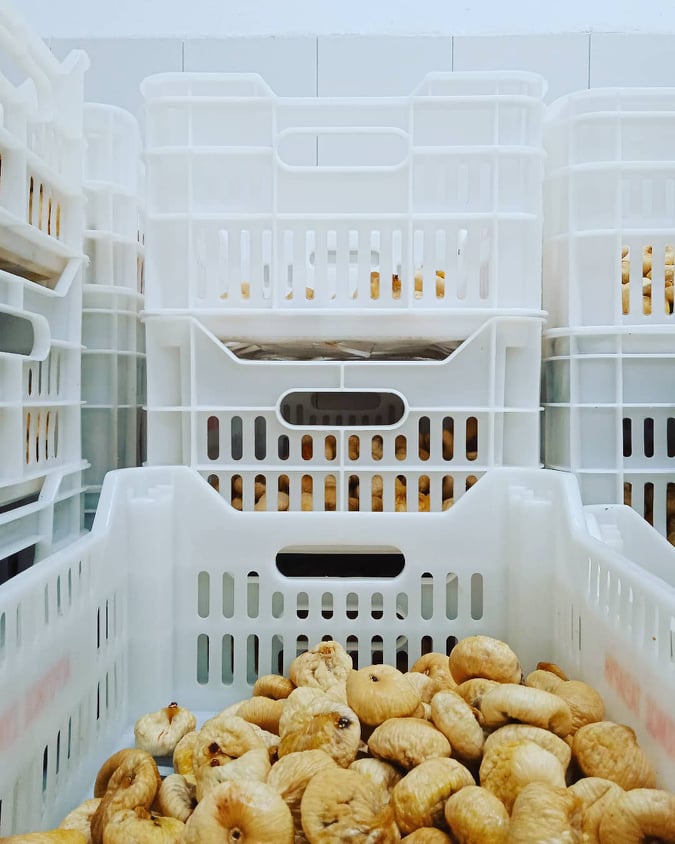
Agri-food is a major asset throughout Istiaia – Edipsos, with “treasure” production units. Thus, agrotourism tours are a staple of the journey. The figs of Taxiarchis Cooperative are a PDO product exported all over the world. The dried figs (Ficus carica) hail from the “Smyrna” variety, with their distinctiveness coming from sun-drying, the sweet flesh, and their size.

Fig trees are cultivated exclusively within a geographic zone defined by the communities of Taxiarchis, Neos Pyrgos, Agios Georgios, Oreoi, Istiaia, Kamaria, and Kastaniotissa in Northern Evia.

Local dairy products also have pride of place. At the Schoretsanitis dairy, the region’s PDO feta is impressive, the popular “skaroto” cheese comes in various flavors to accompany wine and tsipouro, and the butter and fresh mizithra round out the range, directly from the high mountains.
Mayor Ioannis Kotzias of Istiaia – Edipsos remarked: “Despite the immense destruction Northern Evia suffered over the last year, it remains standing and moves forward, striving for a better tomorrow for the region, its residents, and its visitors.
The lighting of the Christmas tree of solidarity and hope, as we named it, is a major festival and marks a great rebirth.”